
Last updated October 16, 2026
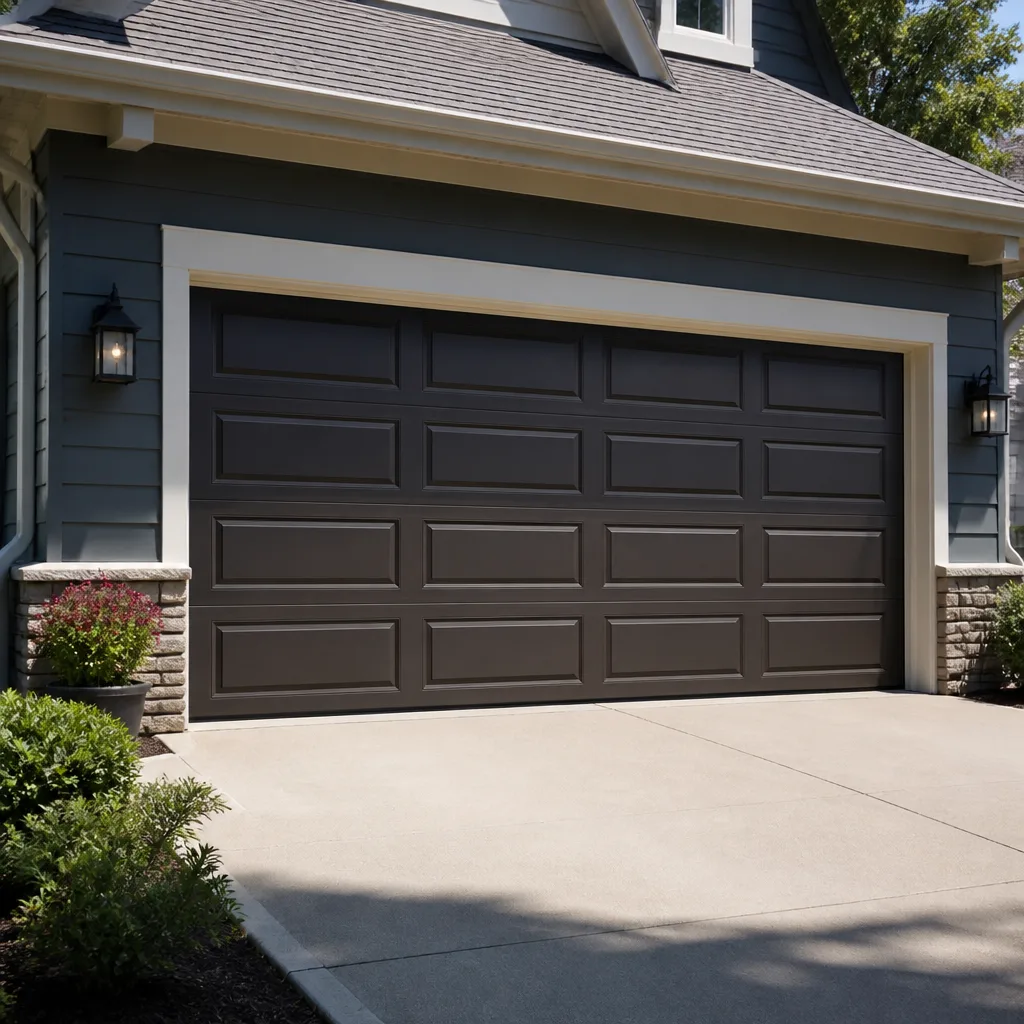 Raised-panel steel
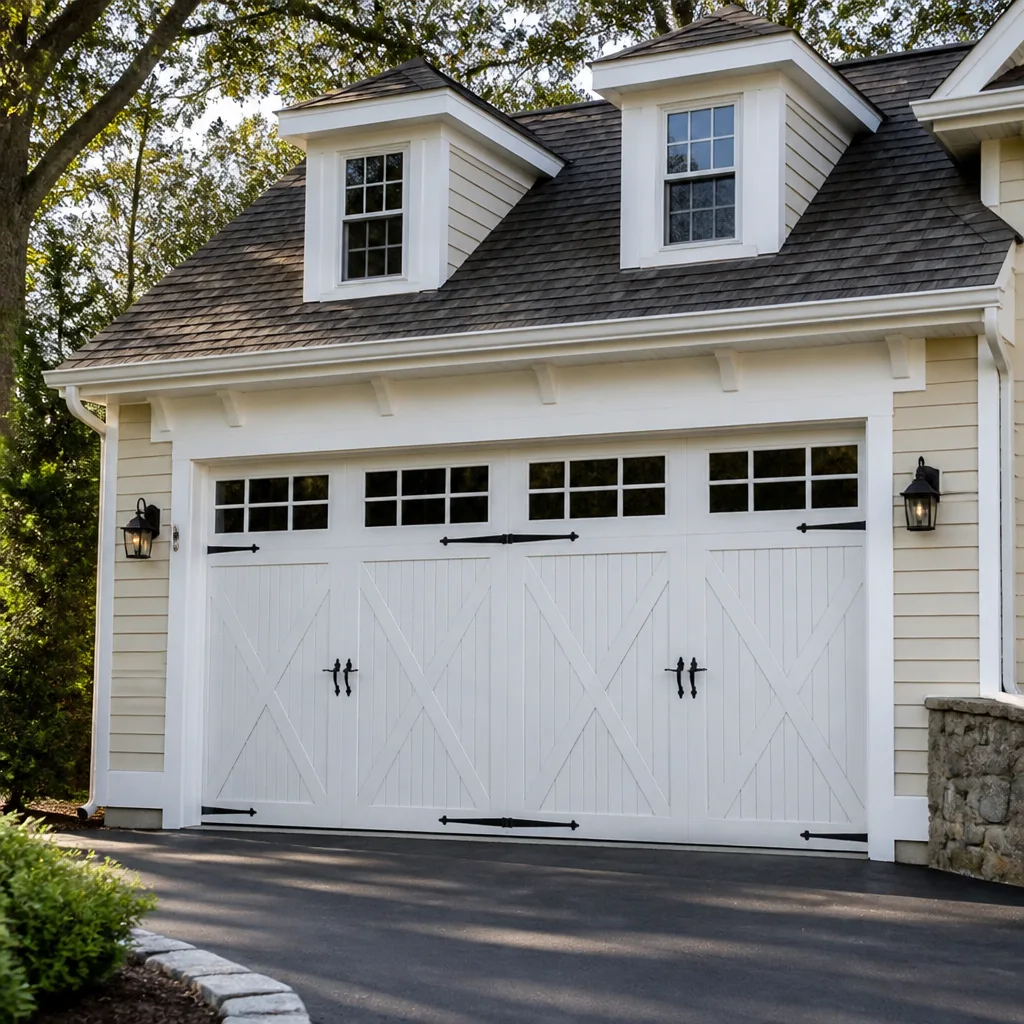 Carriage house
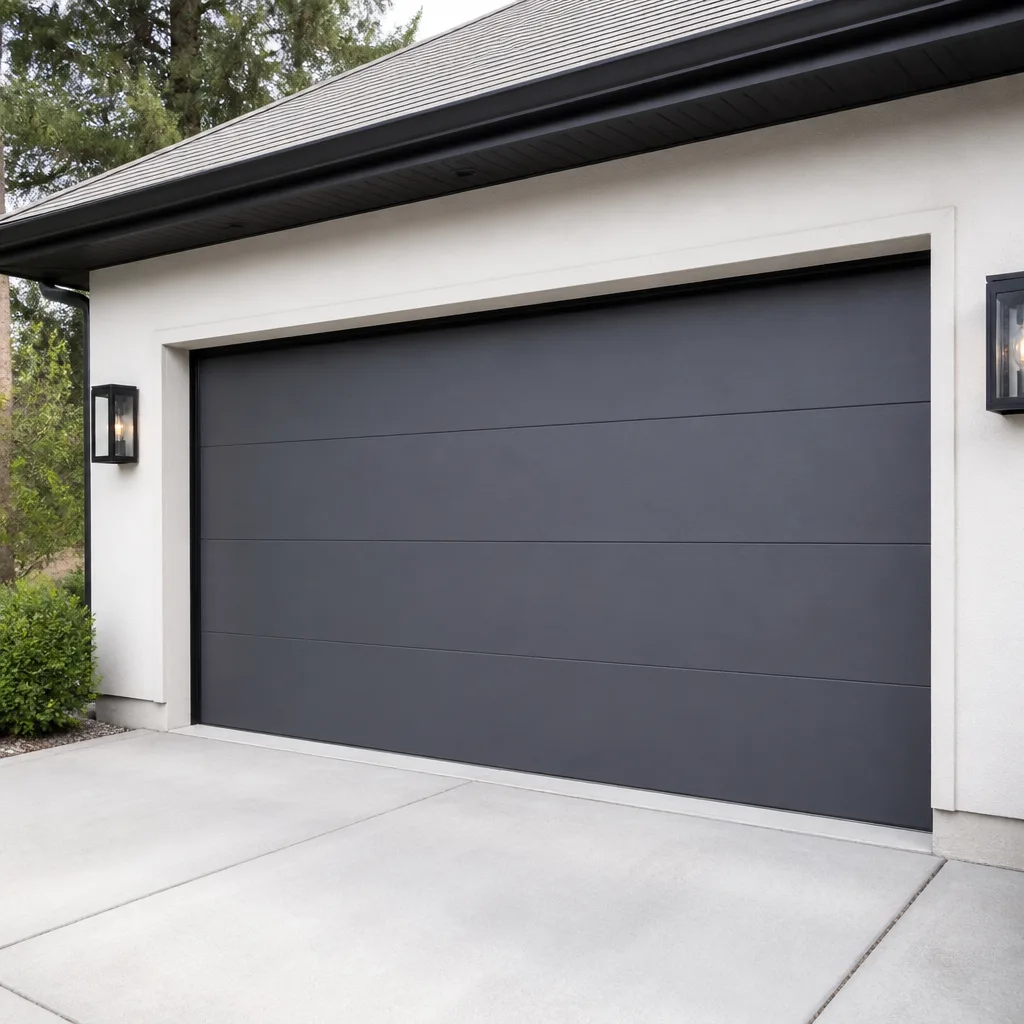 Modern flush
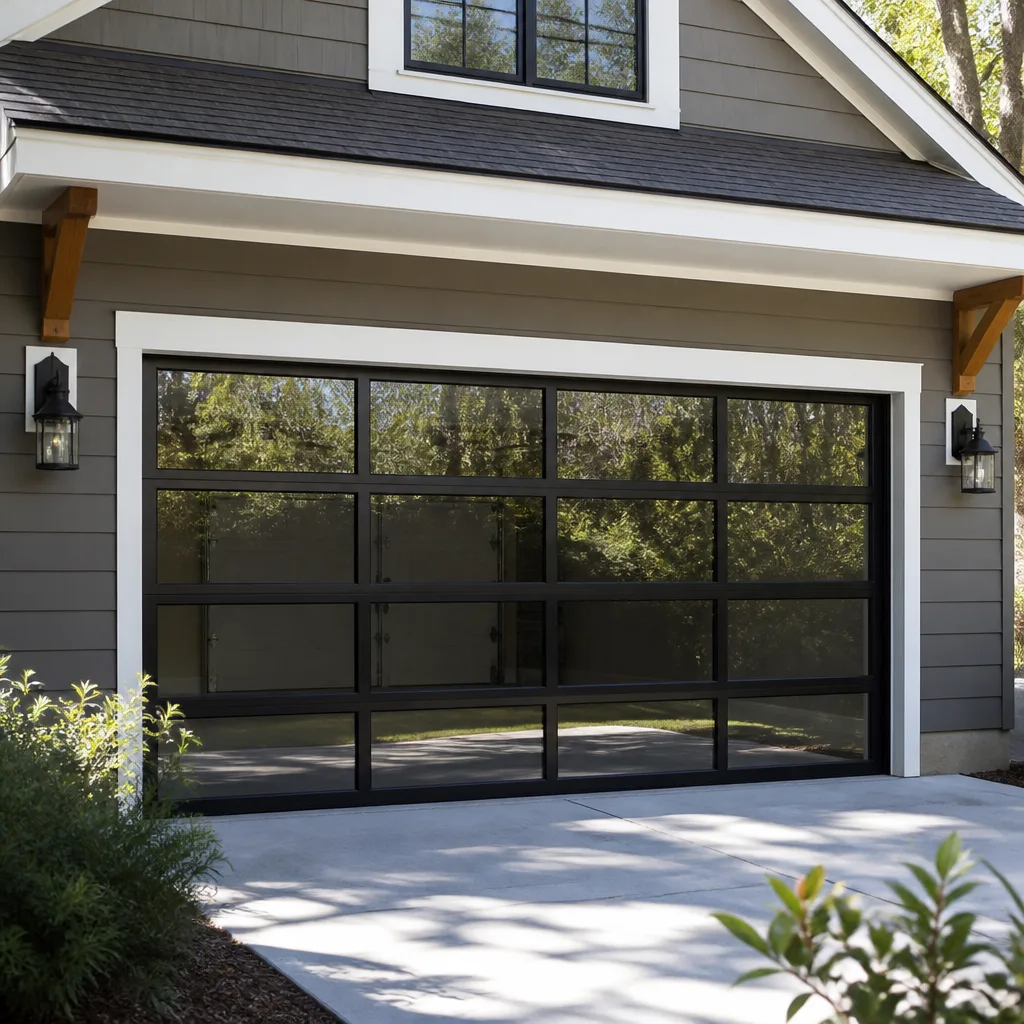 Full-view glass
 LiftMaster openers
 Chamberlain openers
Full 25-point door and opener safety check with every visit - springs, cables, rollers, tracks, and your LiftMaster or Chamberlain opener included
You get a price before we start. It does not change when the truck arrives.
Get your free estimateGarage Door Permits, Codes & Inspections in GA: What You Need to Know
A full garage door replacement in Sandy Springs may require a permit; the same job a mile away in unincorporated Fulton County may not. This isn’t a technicality. Get it wrong and you could be sitting at a closing table in three years while a buyer’s home inspector flags unpermitted work and the lender pauses the deal. We’ve watched Atlanta homeowners discover this at the worst possible moment – and we’ve also watched them avoid it entirely because someone told them the rules upfront. For Garage Door Warning Signs: A Atlanta Homeowner’s Reference Guide, see our related resource. This guide gives you the actual rules, jurisdiction by jurisdiction, so you know exactly what applies to your house before you touch the door.
Styles & brands we work with
Quick Answer
Whether you need a permit for a garage door replacement in Georgia depends on which municipality your home sits in. Atlanta, Sandy Springs, Marietta, and Decatur each have their own rules for when a permit is required, and unincorporated Fulton and DeKalb counties operate under different standards than their cities. Most full replacements of the door itself (panels plus track) require a building permit in incorporated cities, while minor repairs like spring or opener replacement do not. The codes that govern the work are the 2020 Georgia State Minimum Standard Codes, which adopt the International Residential Code with specific Georgia amendments.
Table of Contents
- The Permit Requirement by Jurisdiction: Atlanta, Sandy Springs, Marietta, Decatur, and the Counties
- What the Georgia State Minimum Standard Codes Actually Say About Garage Doors
- Pulling the Permit Yourself vs. Having the Contractor Do It
- What Inspectors Specifically Look for on a Garage Door Installation
- How Unpermitted Garage Door Work Shows Up at Resale
- Repair vs. Replacement: Where the Permit Line Falls
- What Permits Cost and Who Pays for Them in Georgia
- Common Mistakes to Avoid
- When to Call a Professional
- Frequently Asked Questions
- The Bottom Line
The Permit Requirement by Jurisdiction: Atlanta, Sandy Springs, Marietta, Decatur, and the Counties
Georgia code enforcement is fragmented. Your permit obligation changes when you cross a city line, and in metro Atlanta those lines shift constantly. Here is what we know from working across the region since 2001.
City of Atlanta
The City of Atlanta Department of City Planning issues building permits for garage door replacement when the work involves changing the door opening dimensions or replacing structural framing. A straight swap of a door in the same rough opening, with no header modification, typically falls under repair and does not require a permit. But the moment you widen the opening, add a second door, or cut into a load-bearing wall, you’re in permit territory. Atlanta inspectors are also particular about wind load documentation for doors on homes in certain exposure zones, especially neighborhoods with long, open street corridors like those near the BeltLine’s western edges.
Sandy Springs
Sandy Springs is stricter. The city requires a building permit for any full garage door replacement, even a same-size swap. Their Community Development department treats a garage door as part of the building envelope, and the permit process includes a plan review for wind load compliance. We’ve seen Sandy Springs ask for manufacturer documentation showing the door meets the design wind speed for the specific home’s exposure category. That’s not a request you get everywhere in Georgia.
Marietta
Marietta’s Development Services department requires a permit for garage door replacement when the door is part of the primary structure and the replacement alters the exterior appearance or the structural attachment points. In practice, that means most full replacements need a permit. Opener swaps and spring replacements do not. Marietta inspectors focus heavily on fire separation between the garage and living space, which is a point we’ll get to in the codes section.
Decatur
Decatur is a small city with a big planning department. The city requires permits for garage door replacement, and because much of Decatur sits in historic districts, a Certificate of Appropriateness may also be required if the door changes the exterior character of the home. We’ve watched homeowners in the MAK Historic District get flagged for a door that didn’t match the review board’s guidelines. If you live in Decatur and your door faces the street, check with the city’s Design, Environment, and Construction division before you order the door.
Unincorporated Fulton County
Unincorporated Fulton County operates under Fulton County’s building permit requirements, which are more permissive than Sandy Springs or Atlanta. A same-size garage door replacement generally does not require a permit in unincorporated Fulton as long as the opening is not modified. This is the loophole that confuses people: cross Roswell Road from Sandy Springs into unincorporated Fulton, and the same job suddenly has different paperwork.
Unincorporated DeKalb County
Unincorporated DeKalb County is similar to Fulton in that same-size replacements often don’t trigger a permit. But DeKalb has more aggressive code enforcement on unpermitted work when it comes to a point of sale, and their inspectors are known to flag safety issues during routine certificate of occupancy inspections on rental properties. If the garage door fails basic safety tests, you’ll hear about it.
What the Georgia State Minimum Standard Codes Actually Say About Garage Doors
Georgia adopted the 2020 Georgia State Minimum Standard Codes, which incorporate the International Residential Code (IRC) with state-specific amendments. For residential garage doors, three sections matter most: wind load, spring containment, and fire separation.
Wind Load Requirements
The IRC, as adopted in Georgia, requires that garage doors on residential structures be designed to resist the design wind pressures specified for the home’s location. In metro Atlanta, that means most doors need to meet a design wind speed of 105 to 115 mph, depending on the exposure category. What most homeowners don’t realize is that this is a documentation requirement as much as a physical one: the inspector wants to see the manufacturer’s wind load certification for the specific door model, not just a door that “looks strong.” We’ve seen installs pass the visual inspection only to stall because the paperwork wasn’t there.
Spring Containment Cables
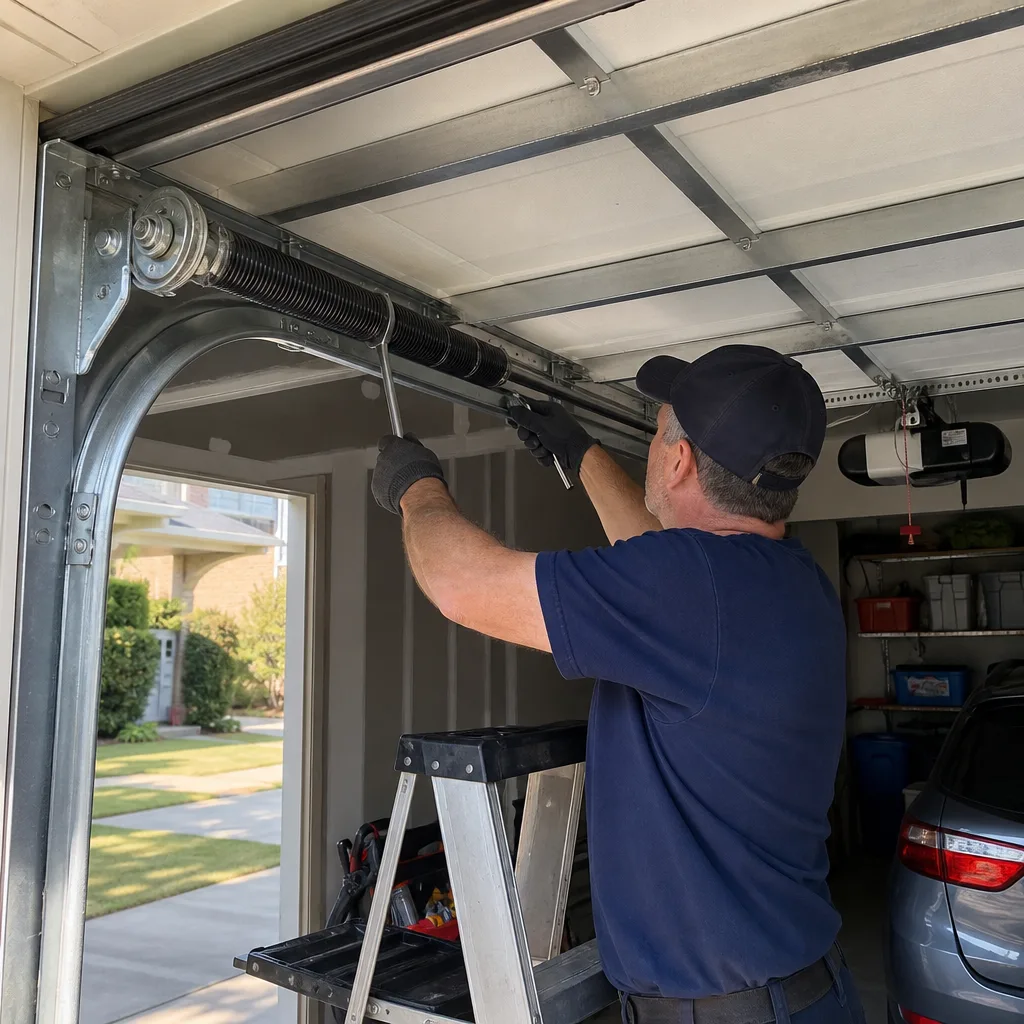
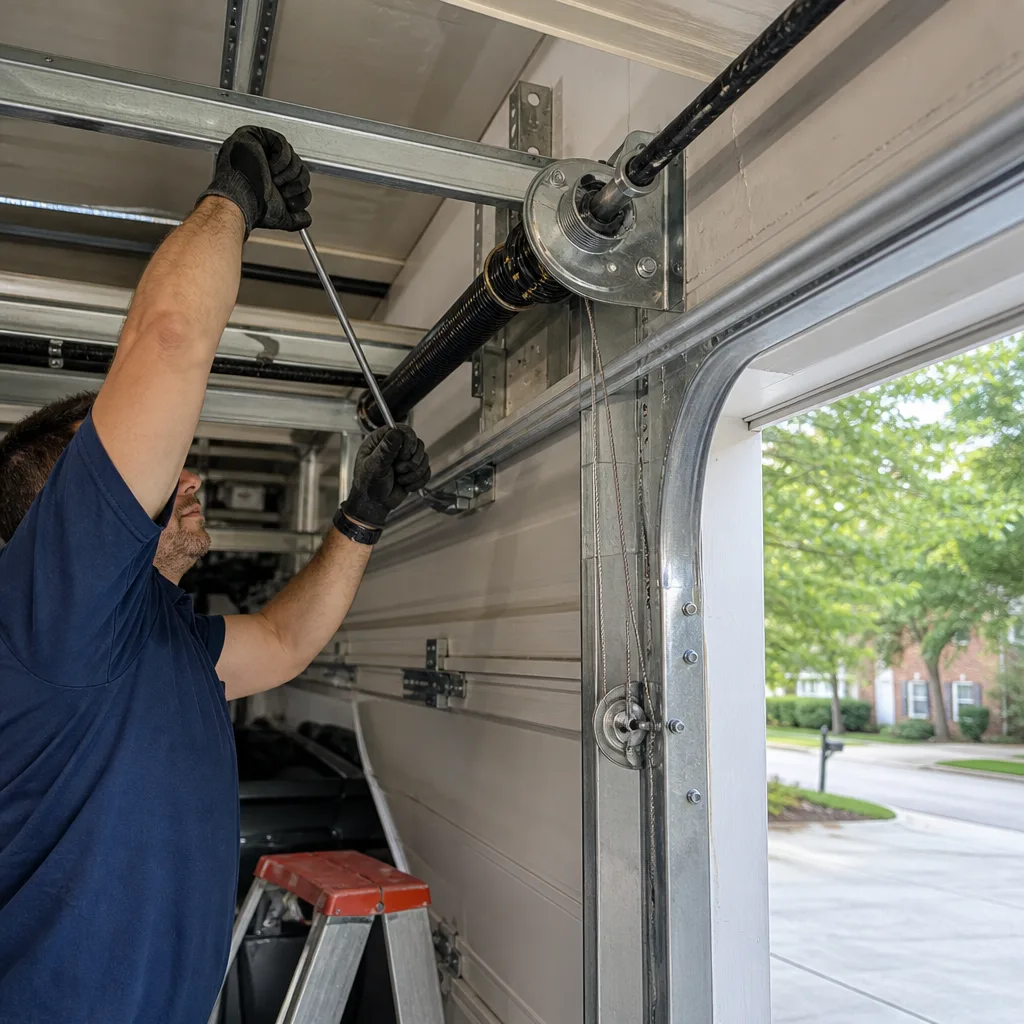
The IRC and the Consumer Product Safety Commission both point to spring containment as a safety matter that codes address indirectly through the requirement that all door components be installed per manufacturer instructions. Torsion springs, the large coil mounted above the door that does most of the lifting, must have containment cables routed through the spring core so that if the spring snaps, it doesn’t fly across the garage. An inspector will check for these cables and for the correct spring size relative to the door weight. This is also where we see the most unpermitted work fail: someone installs a new door but reuses old springs without cables, and an inspector flags it instantly.
Fire Separation at the Garage-House Wall
Georgia’s adoption of the IRC includes the requirement that walls separating a garage from living space have a fire-resistance rating. The garage door itself isn’t fire-rated in residential code, but the door’s attachment points and weatherstripping matter for the overall separation. An inspector checking a garage door replacement will look at the perimeter seals, the threshold, and whether the door closes tightly enough to maintain the intended air barrier. In Marietta, we’ve seen inspectors ask for replacement weatherstripping as a condition of passing final inspection on an otherwise clean install.
Pulling the Permit Yourself vs. Having the Contractor Do It
Here’s the decision that trips up most Atlanta homeowners. When you pull the permit yourself, you become the responsible party on the permit record. That means you’re the one the building department calls if something fails inspection, and you’re the one who has to schedule and attend inspections. When the contractor pulls the permit, they become the permit holder and the responsible party.
This matters more than most people think. Let’s say the work fails inspection because the header bracket is placed incorrectly. If the contractor holds the permit, the building department’s corrective order goes to them, and they are obligated to fix it before the permit closes. If you hold the permit, the order goes to you, and you have to chase the contractor back to the house. In our experience across Atlanta, the second scenario is where projects stall. A contractor who is willing to pull the permit is one who is willing to stand behind the work.
There’s a trust element here too. A contractor who insists on pulling the permit is signaling that they expect the work to pass. A contractor who tells you “you don’t need a permit for this” may be right – or may be avoiding the paper trail. This is why we always tell homeowners to verify the permit requirement themselves, by phone, with the local building department, before they hire anyone. Five minutes on the phone with Atlanta’s Office of Buildings or Sandy Springs’ Community Development team settles the question.
Before any work starts at a Doyle Garage Doors Atlanta job in Georgia, we put the price in writing and confirm who is pulling the permit, if one is required. No verbal estimates, no surprises at the door. That’s how our Doyle Garage Doors Atlanta home team operates, and it’s how every garage door contractor should operate.
What Inspectors Specifically Look for on a Garage Door Installation
This is the section most guides skip. We’re going to tell you what a Georgia inspector actually checks when they walk up to a newly installed garage door, because knowing this before the install is the difference between passing on the first visit and a re-inspection that costs you another permit fee.
- Header bracket placement and attachment. The torsion spring assembly mounts to a header bracket above the door. An inspector checks that the bracket is secured to structural framing, not drywall or sheathing alone. In Atlanta’s older bungalows, where garage headers are sometimes undersized, this is a common failure point.
- Spring containment cables. As covered above, these cables run through the torsion spring core. No cables, no pass. Inspectors in DeKalb and Fulton both check for this.
- Door balance and travel limits. The inspector will cycle the door and check that it stops at the correct points and holds position. A door that creeps up or slams down indicates incorrect spring tension. This is an adjustment item, but repeat offenders get written up.
- Opener force settings and auto-reverse. The opener’s auto-reverse mechanism, which stops and reverses the door when it contacts an obstruction, is mandated by federal law and enforced by code. Inspectors test this with a 2×4 placed flat on the ground. If the door doesn’t reverse, the inspection fails. Period.
- Emergency release cord. The red cord that disconnects the door from the opener must be reachable without a ladder and must be clearly identifiable. Inspectors check this. We’ve seen installs fail because the cord was tucked behind the opener rail or trimmed too short.
- Perimeter weatherstripping and threshold seal. As noted in the fire separation section, the door must close tightly against the jambs and floor. An inspector can flag a gap here, especially in Marietta and Decatur where fire separation gets more attention.
If you’re having a full replacement done and a permit is required, expect this inspection to happen after the install and before the permit closes. The inspector will look at all six items above. A contractor who builds to these points will pass the first time.
How Unpermitted Garage Door Work Shows Up at Resale
Here’s the scenario we opened with. You replace your garage door in 2024. You hire a guy off a Facebook ad who says no permit is needed. The door works fine. In 2027 you list the house in Atlanta. The buyer’s home inspector – and Atlanta buyers’ agents are trained to look for this – notices that the door appears newer than the rest of the house. They check the permitting database. No permit on record. Now you’re in a conversation with the buyer’s agent about whether the work meets code, whether it was done by a licensed contractor, and whether the seller will indemnify the buyer against future issues. In a competitive market, that conversation kills deals.
Atlanta buyers’ agents specifically flag unpermitted work on four items: roofs, water heaters, electrical panels, and garage doors. Garage doors make the list because the safety implications are easy to explain to a buyer – a spring under tension is a loaded gun if installed wrong – and because the permit trail is simple to check. Most Georgia municipalities have online permit databases now, and a simple address search shows what work has been permitted.
We’ve also seen unpermitted work affect insurance claims. If a garage door fails and the insurance adjuster discovers the door was replaced without a permit where one was required, you may be fighting a denial. The door might still be covered, but you’re now on the defensive. That’s a position no Atlanta homeowner wants.
Repair vs. Replacement: Where the Permit Line Falls
Most repair work on garage doors does not require a permit anywhere in Georgia. Replacing a torsion spring, swapping an opener, replacing rollers, installing new cables – these are repairs. They don’t change the building envelope, they don’t modify structural elements, and municipalities treat them as maintenance. We’ve never seen a Georgia jurisdiction require a permit for a spring replacement.
A full door replacement is where the rules diverge. In Atlanta city limits, a same-size swap generally doesn’t trigger a permit. In Sandy Springs, it does. In Marietta, it depends on the exterior appearance. In Decatur, it depends on the historic district. In unincorporated counties, it usually doesn’t. If your installer is replacing the door and the track, and especially if they’re modifying the opening at all, assume a permit until you’ve confirmed otherwise with the local building department.
The threshold question to ask: does this work change the building envelope or structural attachments? If yes, you’re likely in permit territory. This is also the question to ask any contractor who tells you no permit is needed. If they can’t answer why, that’s your signal to keep looking.
What Permits Cost and Who Pays for Them in Georgia
Garage door permit fees in metro Atlanta are modest relative to the project cost, but they vary by jurisdiction. Here’s a general picture based on published fee schedules as of 2025.
- City of Atlanta: A residential building permit for minor alterations typically runs $150 to $400 depending on the project valuation. Garage door replacement usually lands at the lower end.
- Sandy Springs: Building permit fees start around $100 for small projects and scale with valuation. Expect $150 to $350 for a garage door replacement.
- Marietta: Residential building permits for replacement work typically cost $75 to $250. Marietta’s fee schedule is published and straightforward.
- Decatur: Permit fees start around $75 for minor work, but a historic district review can add a Certificate of Appropriateness fee. Expect $150 to $400 total if the historic review applies.
- Unincorporated Fulton and DeKalb: When a permit is required, fees typically run $100 to $300. But as we noted, same-size replacements often don’t require one.
Who pays the permit fee? In most Georgia contractor agreements, the customer pays for permits as a separate line item or as part of the contract price. The key question to ask is not who pays but who pulls. If the contractor pulls the permit, the fee is usually itemized and passed through. If you pull it yourself, you’re paying directly and doing the legwork. A contractor who includes permit costs in the written quote is one who has thought through the process. We put every price in writing before any work starts, including permit fees when they apply, so there are no surprises on the invoice.
For full Garage Door Installation in Atlanta, the permit situation should be settled before the door is ordered, not the day of install.
Common Mistakes to Avoid
- Assuming the permit rule is the same as your previous house. If you moved from Atlanta to Sandy Springs, the rules changed. Confirm your current jurisdiction’s requirement every time, not just once. We see this mistake most often with people who move within metro Atlanta and assume the old rules still apply.
- Trusting a contractor’s “no permit needed” without checking. Some contractors are right. Some are avoiding paperwork. A five-minute call to the local building department settles it. We tell every Atlanta customer to do this before hiring anyone, including us.
- Skipping the wind load documentation. In cities like Sandy Springs that require it, the physical door isn’t enough. You need the manufacturer’s certification on file. Order the doc with the door, not after the inspector asks for it.
- Reusing old springs on a new door. This is a code and safety problem. Springs are sized to the door’s weight. A new door with old springs throws off the balance, and an inspector will flag missing containment cables or incorrect spring size on the spot.
- Doing the work unpermitted and planning to “deal with it later.” Later comes at resale, at an insurance claim, or at a city code sweep. Retrofitting a permit is harder than pulling one before the work starts. It’s not that it can’t be done; it’s that it’s now reactive, not proactive.
- Not checking historic district rules in Decatur. The Certificate of Appropriateness requirement is separate from the building permit. A door that changes the facade character can trigger a review board process that adds weeks. Check this before you order the door.
When to Call a Professional
This isn’t just about permits. For Garage Door Repair Maintenance Checklist for Atlanta Homeowners, see our full guide. Garage doors involve tensioned springs, heavy panels, and safety systems that have to work correctly every single day. Call a professional when the job involves spring replacement, door replacement, or any work that changes the structural attachment points. Call when you’re not sure whether a permit is required and want someone who will check before they work. Call when the door is off balance and you don’t know why. Doyle Garage Doors Atlanta offers free estimates throughout Atlanta, and every job includes a written price before work begins. Call (229) 408-2364 to talk through your situation with a real person, not a phone tree.
Frequently Asked Questions
In Atlanta city limits, a same-size garage door replacement generally does not require a permit, but any work that modifies the opening or structural framing does. In other metro Atlanta municipalities like Sandy Springs, a permit is required even for same-size replacements. Call your local building department to confirm – it takes five minutes and removes the guesswork. If you need a free in-person look at the job, call (229) 408-2364 and we’ll walk it through with you.
Permit fees range from about $75 to $400 across metro Atlanta, depending on the city and the project valuation. City of Atlanta fees for minor alterations typically fall between $150 and $400, while Marietta and Decatur permits often run $75 to $250. Historic district review in Decatur can add additional cost. A written estimate that includes permit fees, when they apply, eliminates the surprise.
The work shows up as unpermitted in the city’s database, and a buyer’s home inspector at resale can flag it. You may be required to obtain a retroactive permit, which means the work gets inspected after the fact and may need to be corrected before the permit closes. In worst cases, the unpermitted work affects a pending sale or an insurance claim. Pulling the permit upfront is always cheaper than retrofitting one.
Yes, and in most Georgia cities, the contractor is allowed to pull the permit as the responsible party. This puts the obligation to pass inspection on them, not on you. A contractor who insists on pulling the permit is signaling that they expect the work to meet code. We always confirm permit responsibility in writing before work starts.
The auto-reverse test checks that the door stops and reverses when it contacts an obstruction. Inspectors place a 2×4 flat on the ground under the door and close it. If the door doesn’t reverse on contact, the inspection fails. This is a federal safety standard enforced by Georgia code. Our Garage Door Opener Repair in Atlanta service includes testing and adjusting the auto-reverse on every opener we touch.
No, routine repairs like spring replacement, cable replacement, roller replacement, and opener installation do not require a permit anywhere in metro Atlanta. The permit requirement attaches to full door replacement and structural modification, not to maintenance and repair work. For repair work, the bigger question is whether the contractor carries the right parts on the truck and stands behind the work in writing. We do both, and every Garage Door Repair in Atlanta job includes a written 365-day guarantee.
The Bottom Line
Garage door permits in Georgia are a patchwork. Your obligation depends on your municipality, your door’s location relative to the street, and whether the opening changes. The codes themselves are consistent statewide: the 2020 Georgia State Minimum Standard Codes require wind load documentation, spring containment cables, functional auto-reverse systems, and proper attachment to structural framing. The homeowner’s job is to confirm the permit requirement before work starts, decide who pulls the permit, and hire a contractor who will put the permit plan and the price in writing. Do those three things and the garage door project ends with a passed inspection and a closed permit, not a conversation at a closing table. For more guides & resources, visit our blog. For a free estimate in Atlanta, call (229) 408-2364. A real person answers, day or night.
Written by Aaron Teague, Owner at Doyle Garage Doors Atlanta, serving Atlanta since 2001.
See the difference
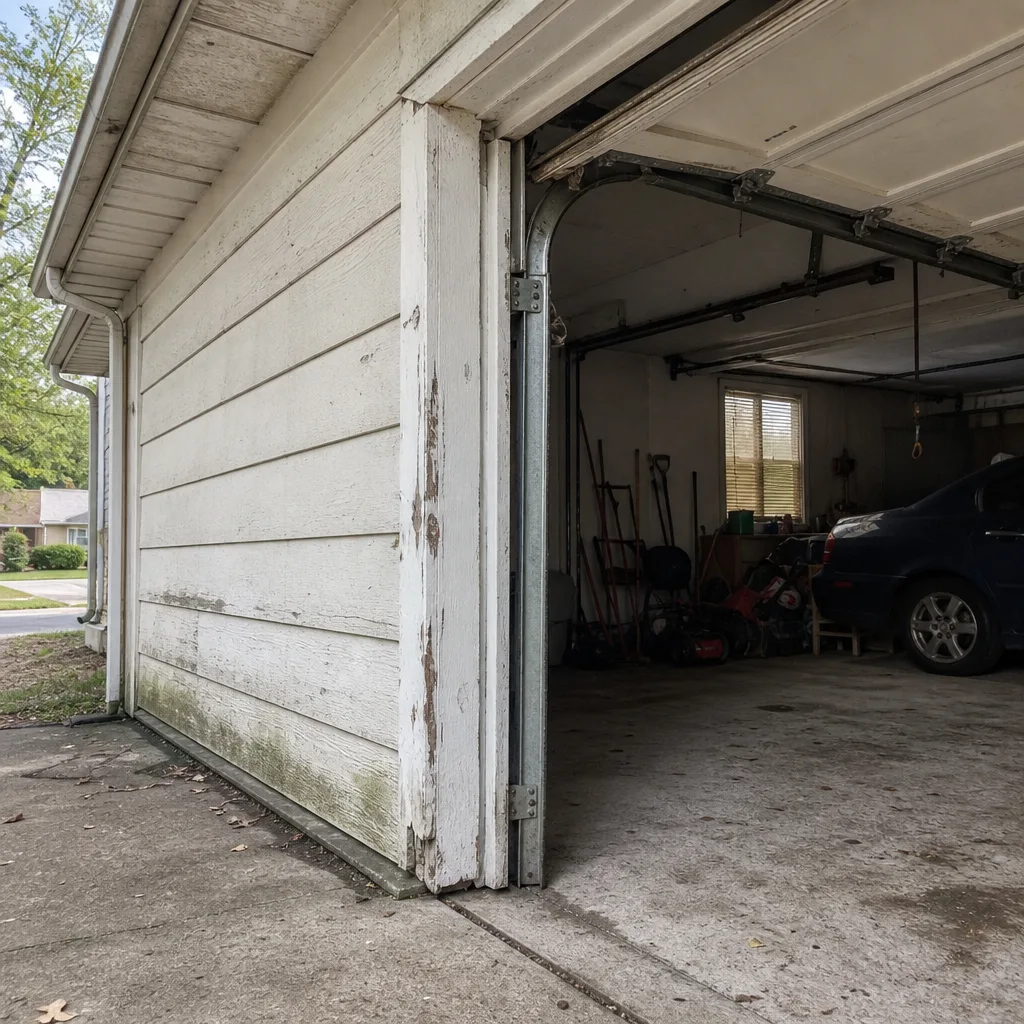 Before
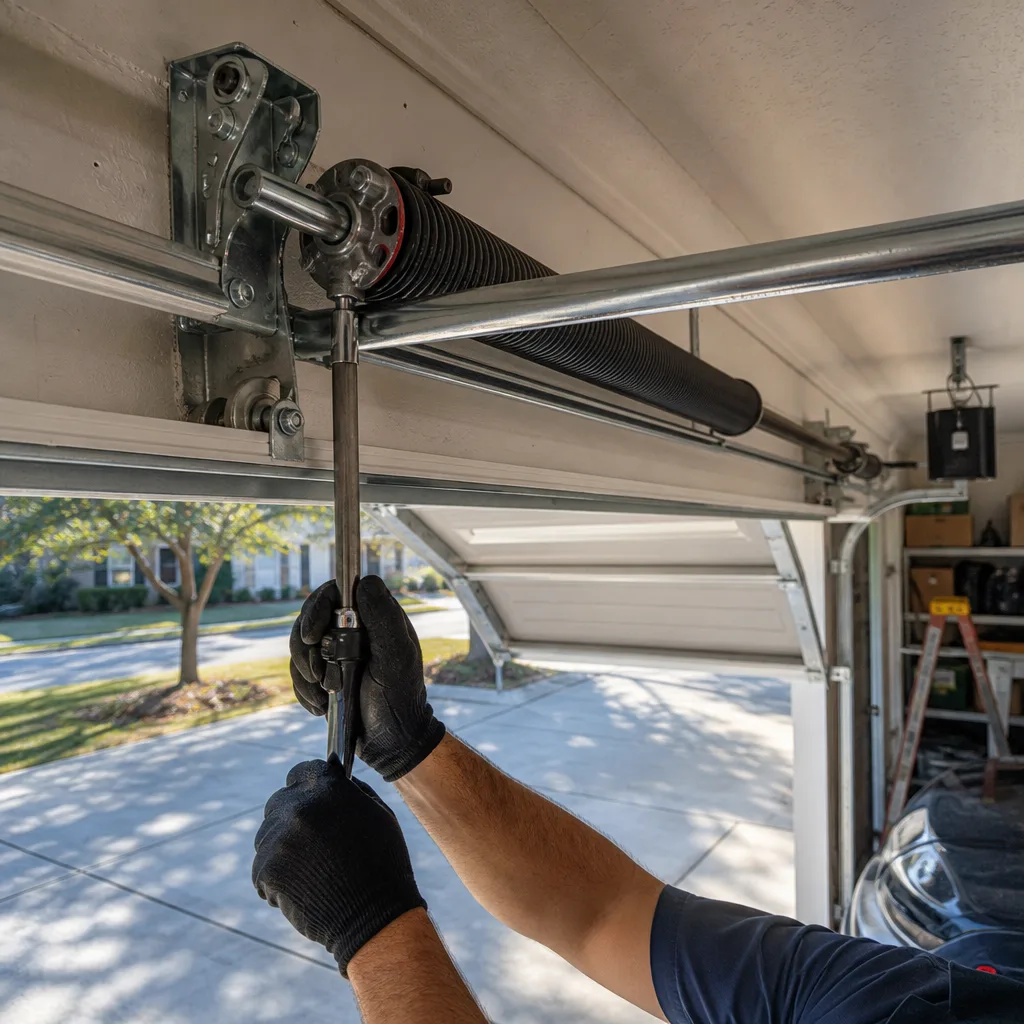 After
After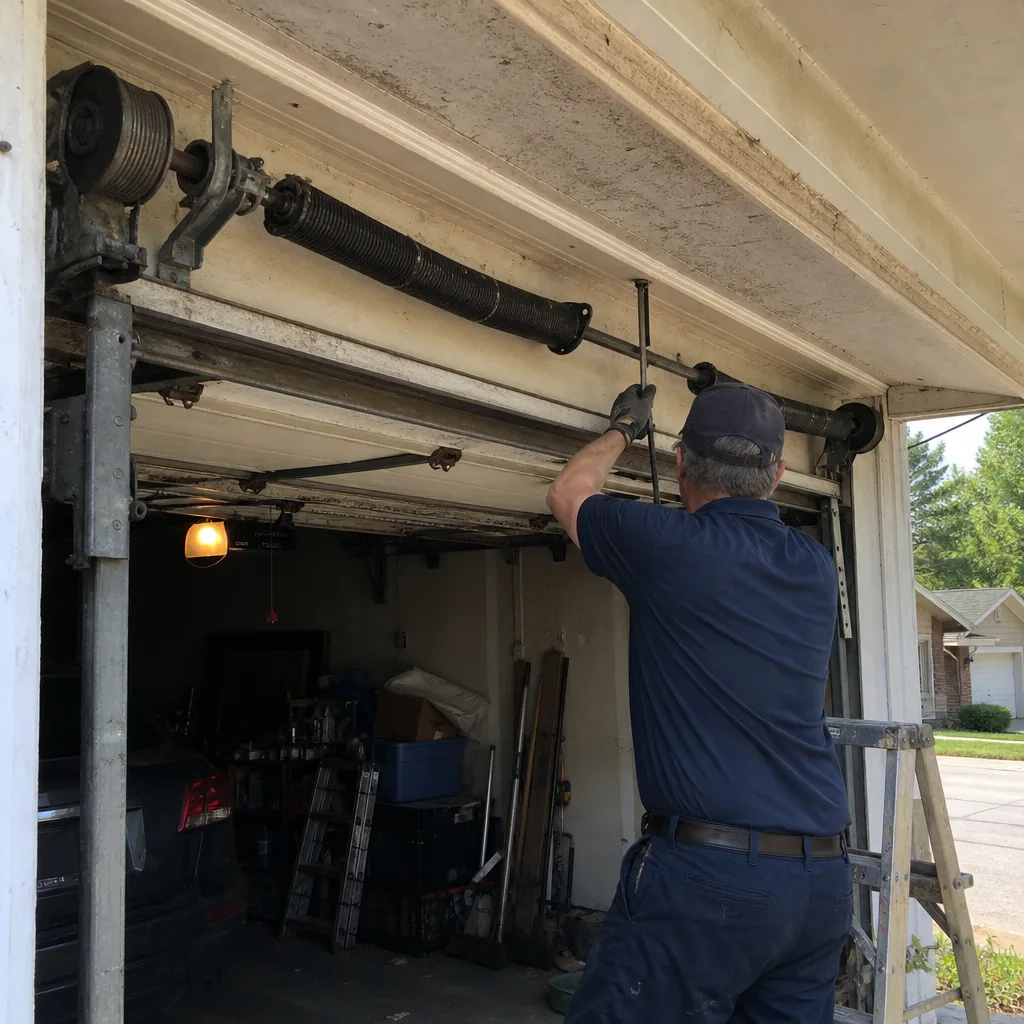 Before
 After
After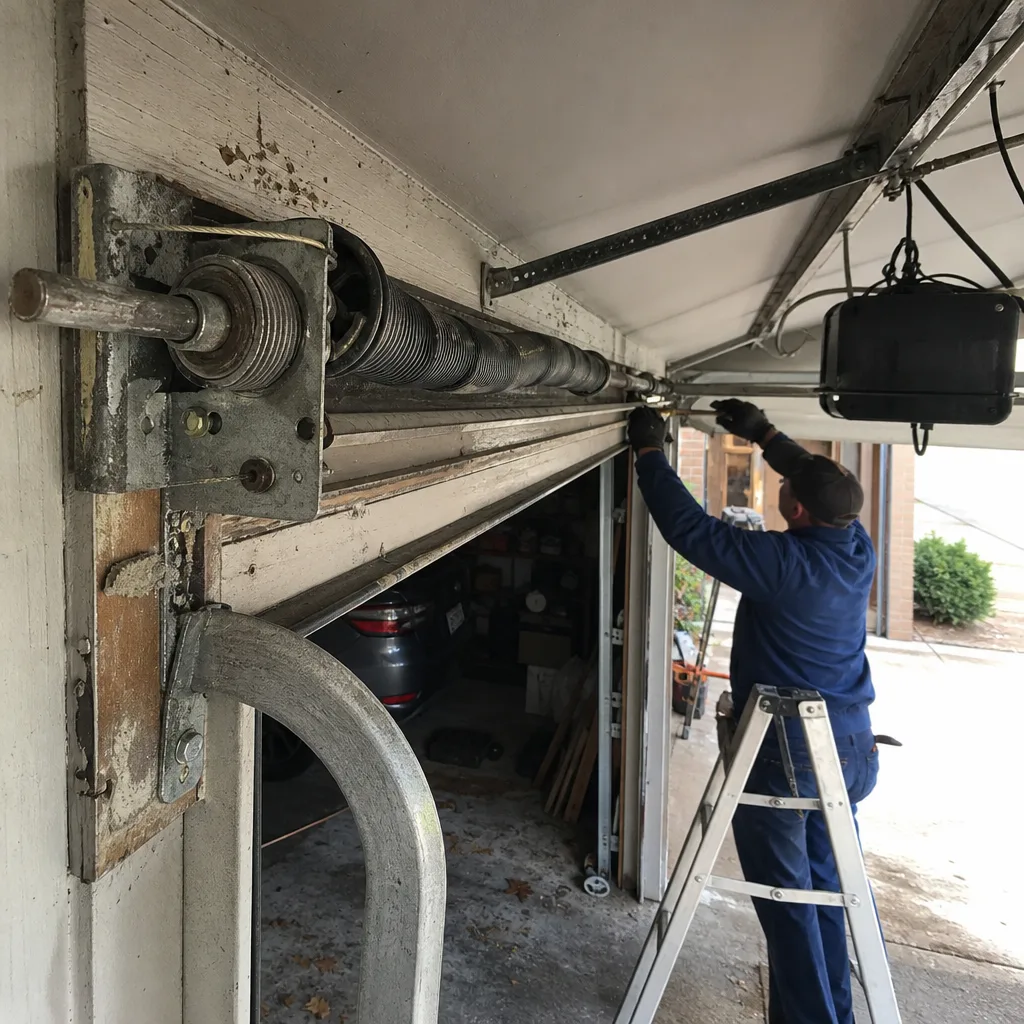 Before
 After
After