
Last updated October 16, 2026
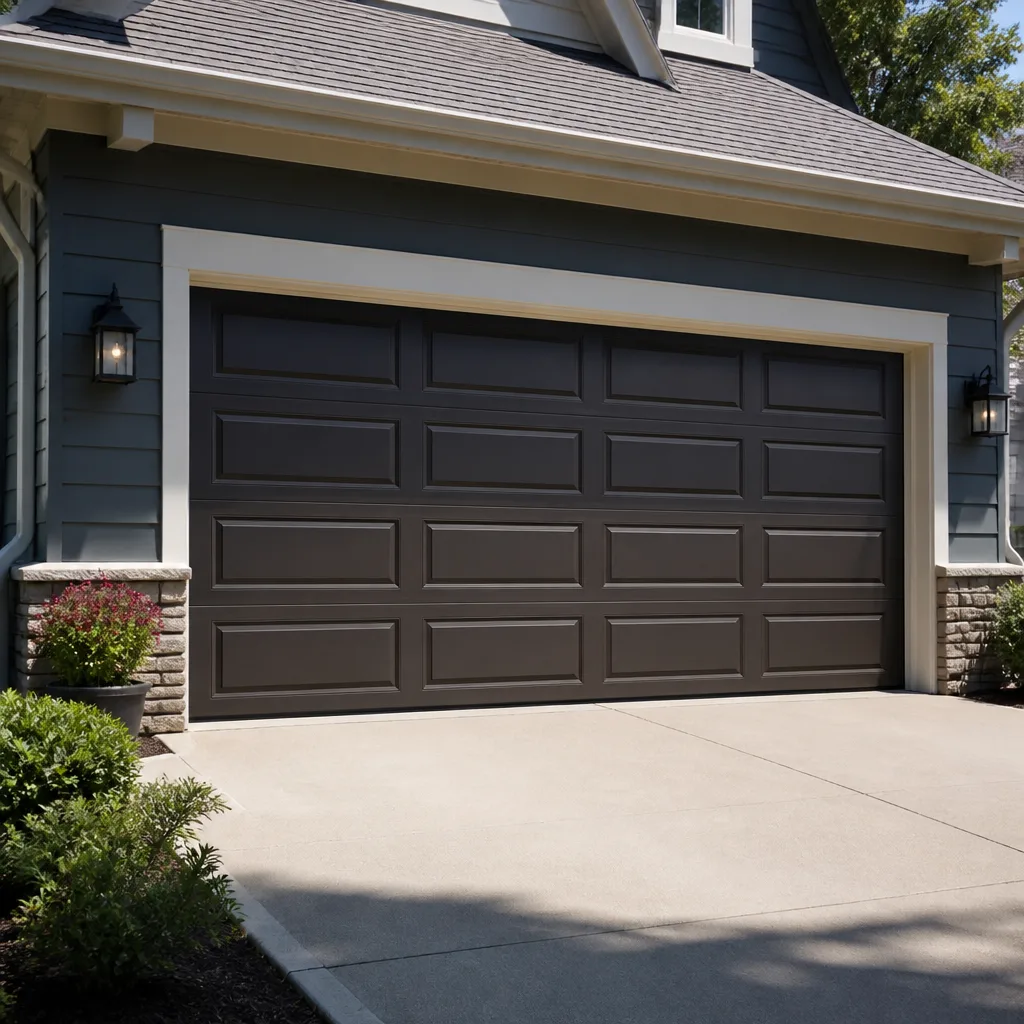 Raised-panel steel
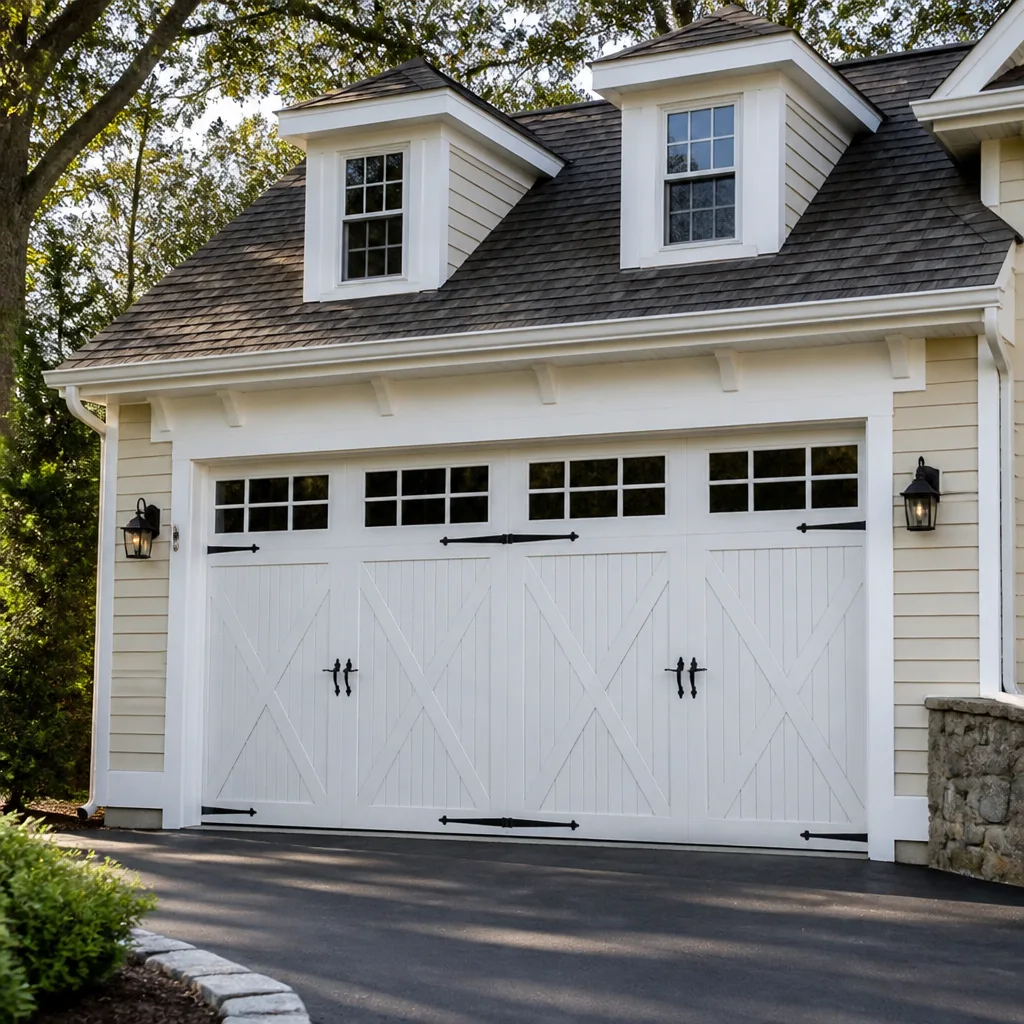 Carriage house
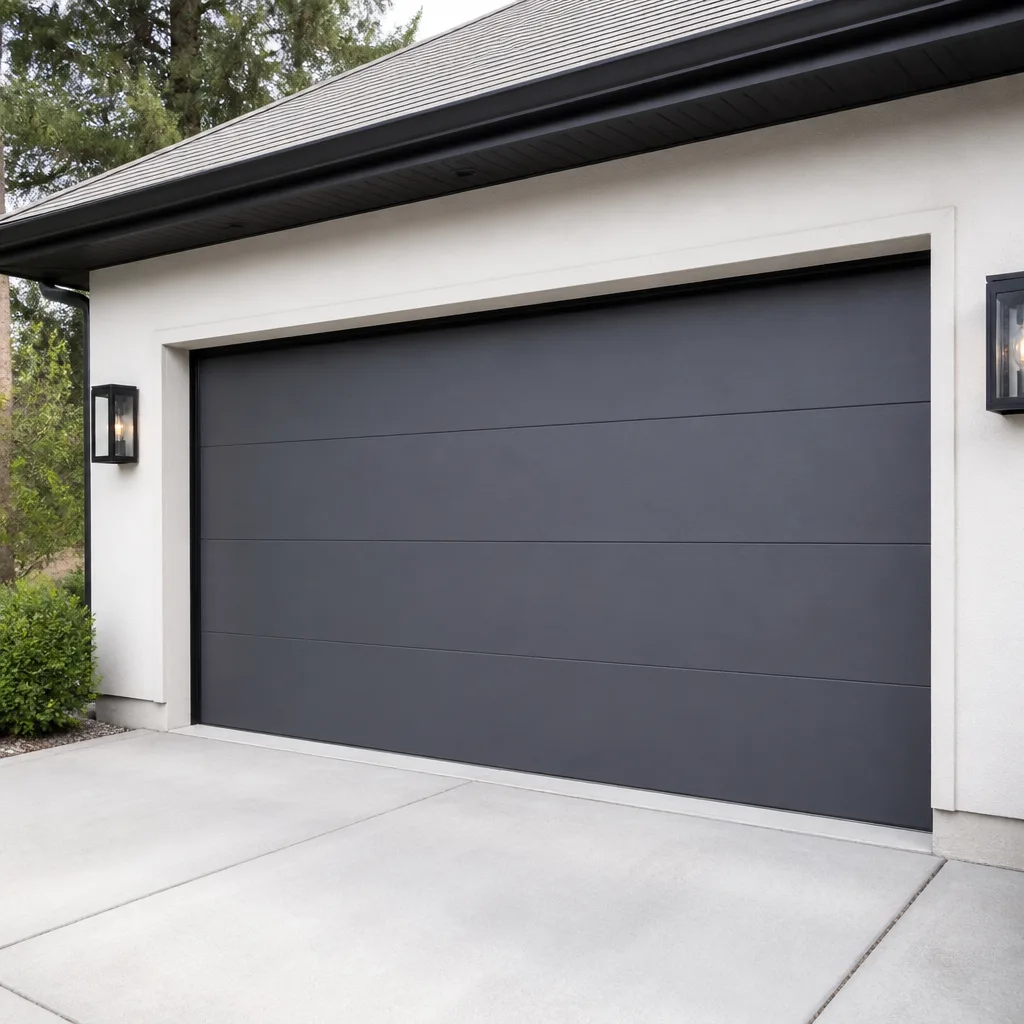 Modern flush
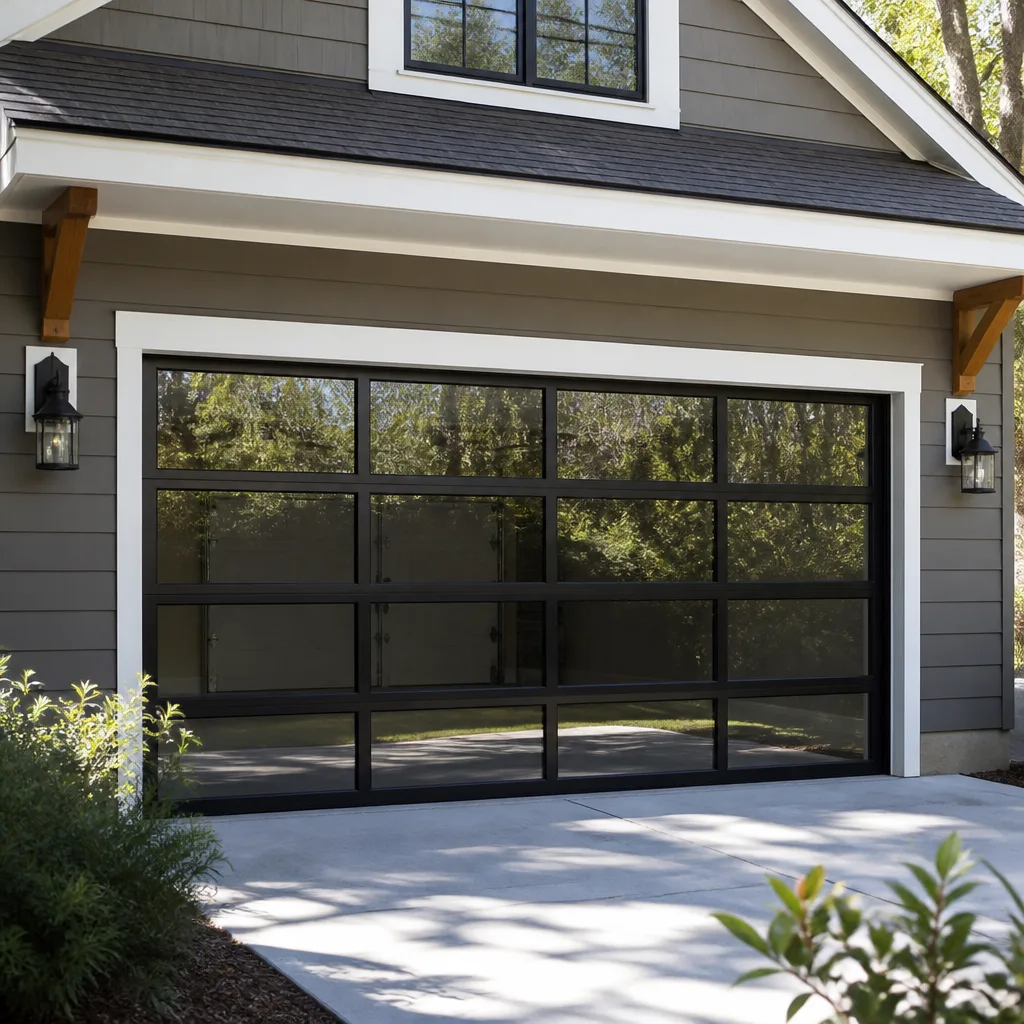 Full-view glass
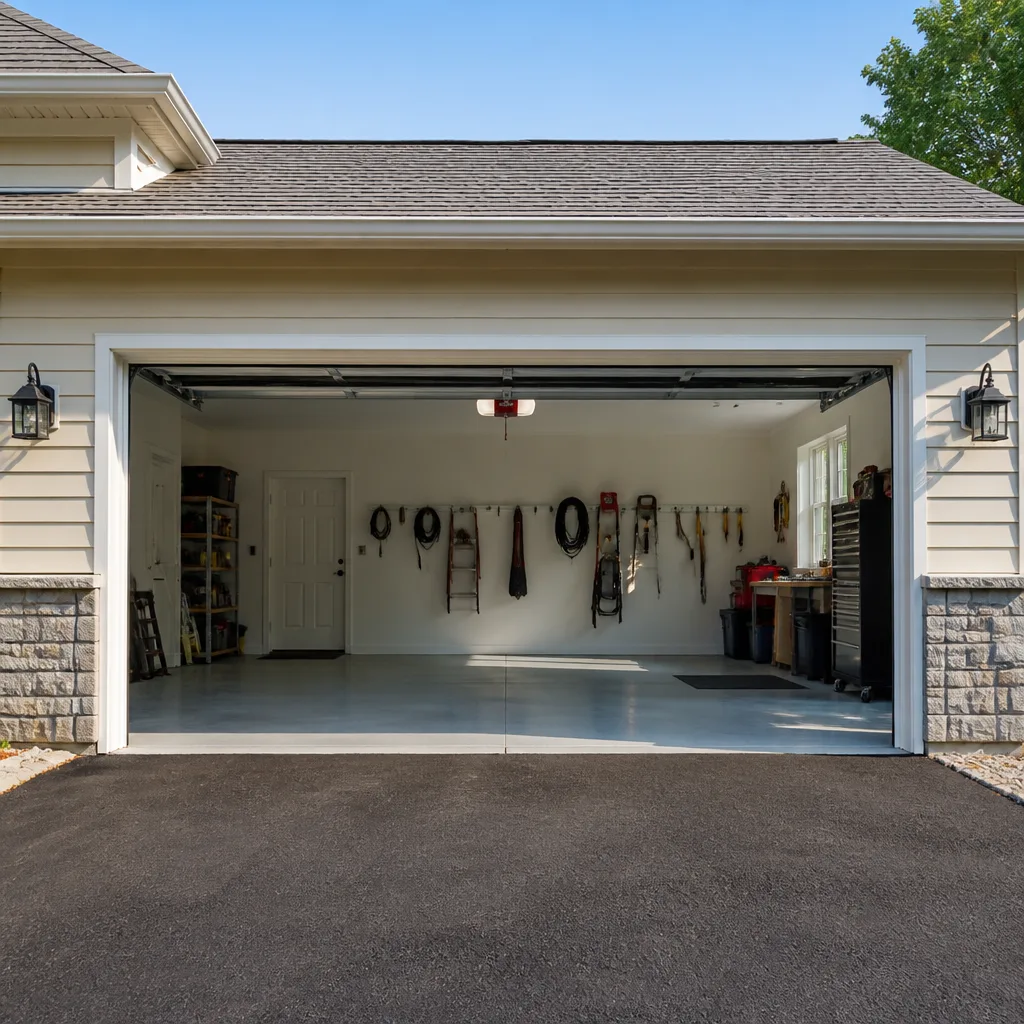 LiftMaster openers
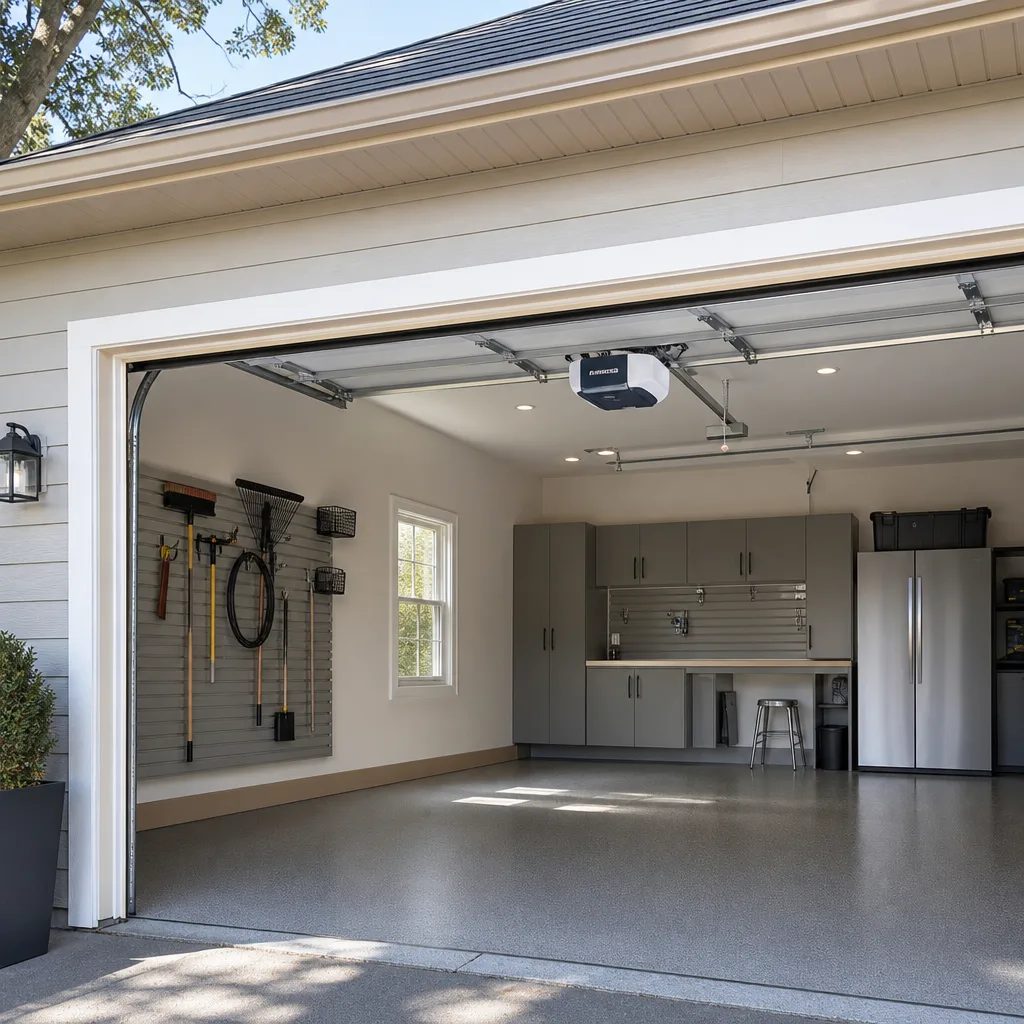 Chamberlain openers
Full 25-point door and opener safety check with every visit - springs, cables, rollers, tracks, and your LiftMaster or Chamberlain opener included
You get a price before we start. It does not change when the truck arrives.
Get your free estimateSeasonal Garage Door Care for Atlanta: Year-Round Homeowner’s Guide
Here’s something most Atlanta homeowners don’t realize: the month your garage door is most likely to fail isn’t January, when ice coats the driveway. It’s August. Three months of 95°F heat have expanded every metal component, the torsion spring has been working against its own thermal fatigue since Memorial Day, and the opener motor has been running hot for weeks. By the time Labor Day rolls around, the weak points have already declared themselves. This guide walks you through what to check each season in Atlanta’s specific climate, when to address problems yourself, and when a call to a professional will save you money and frustration. For a deeper dive, see our Complete Guide to Garage Door in Atlanta.
Quick Answer
Seasonal garage door care in Atlanta means following a rhythm that matches the city’s unique climate: clean the photo-eye sensors and test auto-reverse during March-to-May pollen season, check spring tension and opener heat dissipation in summer, adjust limit switches and lubricate moving parts in fall, and use a specific pre-ice protocol before winter freezes. Most homeowners can handle basic cleaning and testing in about 30 minutes per season, but spring tension adjustments and limit switch recalibration should always be handled by a trained technician because those components are under dangerous tension. Not sure which camp you fall into? Our DIY vs Professional Garage Door guide for Atlanta homeowners can help you decide.
Styles & brands we work with
Table of Contents
- Atlanta’s Pollen Season: The Most Overlooked Maintenance Window
- Summer Heat: What 95°F Days Do to Springs, Seals, and Openers
- Fall Preparation: Limit Switches and the Cool-Air Transition
- Winter Ice Protocols: The 24-Hour Pre-Freeze Checklist
- After the Storm: Assessing Atlanta Hail and Wind Damage
- Your Seasonal Maintenance Calendar at a Glance
- Common Mistakes to Avoid
- When to Call a Professional
- Frequently Asked Questions
Atlanta’s Pollen Season: The Most Overlooked Maintenance Window
From mid-March through late April, Atlanta becomes one of the most pollen-saturated cities in the country. The yellow pine dust that covers your car also settles on your garage door’s photo-eye sensors, the two small lenses mounted near the floor on either side of the door opening. When those lenses get coated with pollen, the sensor can’t “see” the beam traveling between them, and the opener behaves as if something is blocking the door. The result is the classic phantom reversal: the door starts to close, then suddenly reverses for no apparent reason. Homeowners often assume the opener is failing and call for a repair that isn’t needed. In our experience at Garage Door Opener Repair in Atlanta, a significant percentage of spring service calls are resolved with a 30-second sensor cleaning.
Here’s what to do during pollen season in Atlanta:
- Clean the photo-eye lenses once a week in March and April. Use a dry microfiber cloth, not a wet one. A wet cloth turns pollen into a paste that clogs the lens housing. If the lens is heavily coated, use a slightly damp cloth first, then dry thoroughly with a clean cloth.
- Test the auto-reverse function monthly. Place a roll of paper towels flat on the ground in the door’s path, then close the door. The door should reverse within two seconds of contacting the roll. If it doesn’t, the opener’s force settings need adjustment by a professional.
- Remove pollen from the door tracks. Pollen mixed with humidity creates a sticky film inside the vertical tracks. Wipe the tracks with a dry rag, then apply a small amount of white lithium grease to the track rollers. Don’t use WD-40: it attracts dust and makes the problem worse.
- Check the weatherstripping along the door’s bottom edge. Pollen and moisture can accelerate dry-rot in rubber seals that are already weakened from winter cold.
One Atlanta-specific detail many guides miss: the pollen season here overlaps with spring storm season. A pollen-coated door combined with an afternoon thunderstorm creates a muddy slurry that works its way into the roller bearings. If your door sounds gritty or rougher than usual during April, that’s likely the cause, and ignoring it shortens the life of the rollers.
Summer Heat: What 95°F Days Do to Springs, Seals, and Openers
Atlanta’s summer heat does three specific things to garage doors, none of which show up in generic maintenance articles. First, the torsion spring, which is the large coil mounted above the door that does most of the lifting, expands in sustained heat. That expansion slightly changes the spring’s tension characteristics. Second, the rubber bottom seal along the door’s lower edge dries and cracks under July UV exposure, allowing dust, insects, and cooled air to pass underneath. Third, the opener motor runs hotter because it’s working in a garage that can easily reach 110°F or higher by mid-afternoon.
What we recommend checking during June through August in Atlanta:
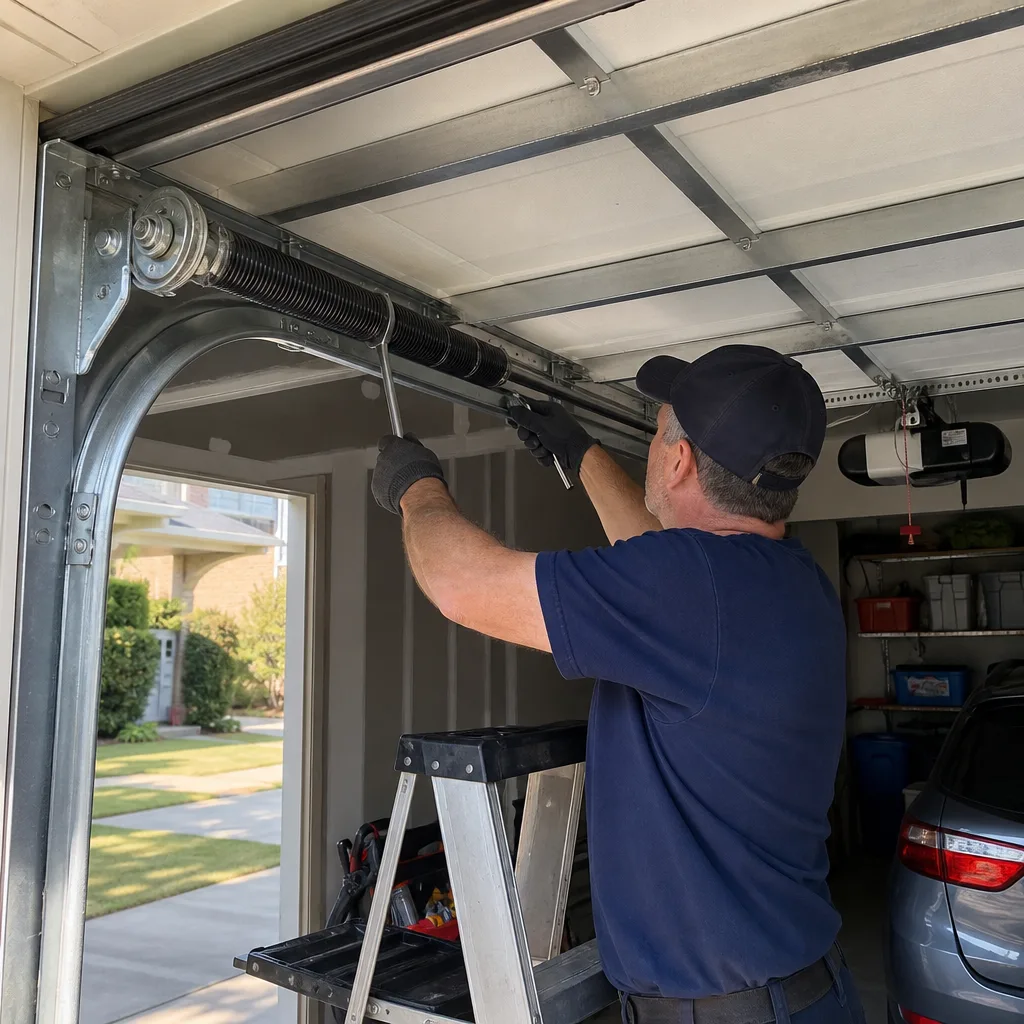
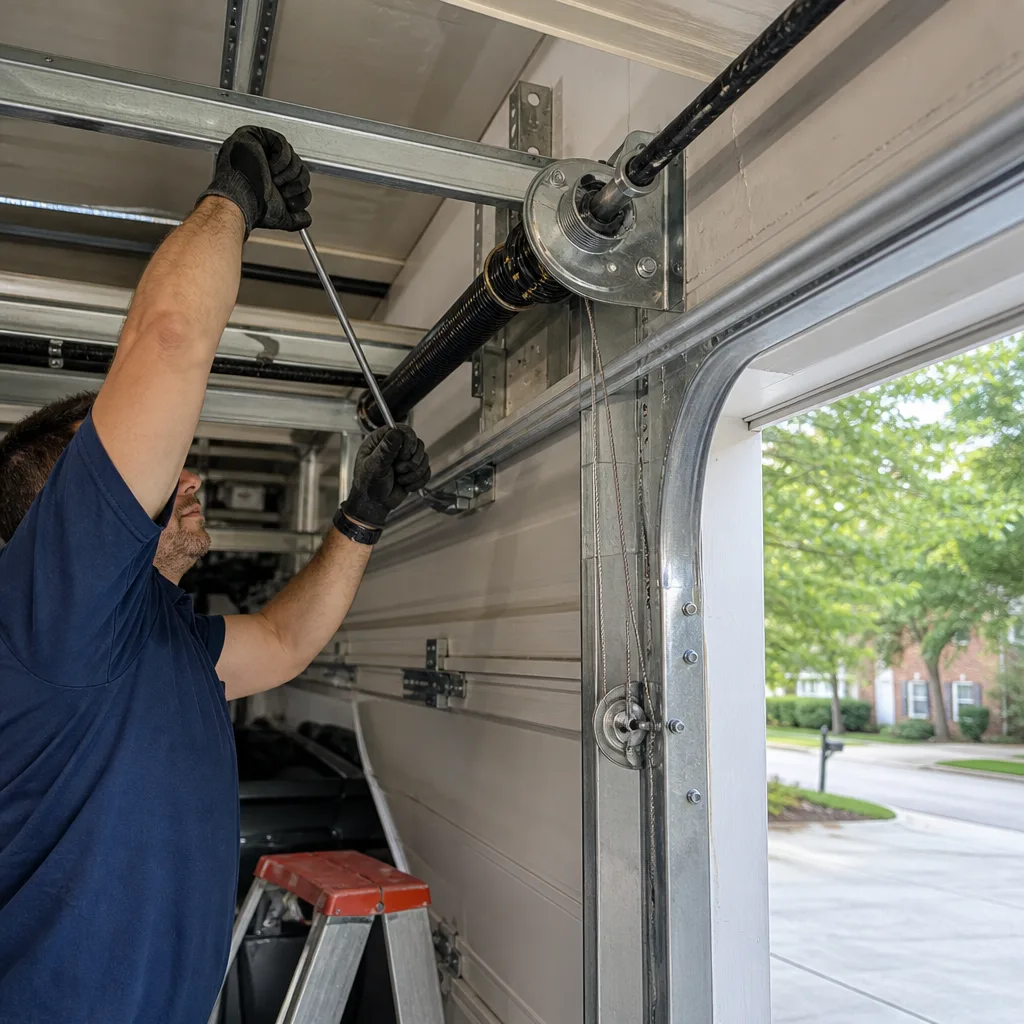
- Listen for a change in the door’s balance. Disconnect the opener using the emergency release cord (the red handle hanging from the trolley carriage) and manually lift the door to waist height. It should stay in place on its own. If it drops or rises, the torsion spring tension has shifted. This is not a DIY adjustment: torsion springs hold enough stored energy to cause serious injury, and any tension change requires a trained technician.
- Inspect the bottom seal for cracks and gaps. Run your hand along the rubber strip at the door’s bottom edge, looking for brittleness, splits, or daylight visible from inside the garage. A cracked seal in a Georgia summer lets in humidity that rusts the door’s internal hardware and can raise the garage’s interior temperature by several degrees.
- Ensure the opener has clearance for heat dissipation. Check that nothing is stacked within six inches of the opener’s motor housing. The LiftMaster and Chamberlain units we install most often in Atlanta are designed to shed heat through their outer casing, but boxes, insulation, or stored items pressed against the unit trap heat and shorten motor life.
- Test the opener’s force sensitivity. The heat affects the door’s weight distribution as metal expands. If the opener strains to lift the door, or if the auto-reverse triggers too easily, the force settings may need recalibration.
If you open your garage in the late afternoon after a hot Atlanta day and hear a creak or pop from the spring area, note it. A torsion spring that’s nearing the end of its life often announces itself during the hottest weeks of the year. Addressing it before failure costs less than an emergency replacement and avoids the possibility of the door coming down without the spring’s counterbalance.
Fall Preparation: Limit Switches and the Cool-Air Transition
When October arrives and Atlanta’s temperatures start swinging between 45°F mornings and 75°F afternoons, every metal component on your garage door is undergoing daily expansion and contraction cycles. This is the time to address the limit switch, the small mechanism inside the opener that tells the motor how far to travel when opening and closing the door. As the metal door sections and track hardware cool and contract, the door’s overall dimensions shift by a few millimeters, and the limit switch setting that worked perfectly in August may now cause the door to stop slightly short of the ground, leaving a small gap, or to press too firmly against the concrete, straining the opener.
Fall maintenance in Atlanta should include:
- Observe a full open and close cycle. Watch the door closely as it closes. Does it seat fully against the floor without bouncing? When it opens, does it reach the fully open position without jerking or hanging up?
- Lubricate the torsion spring. Use a spray-on white lithium grease applied to the spring coils while the door is closed and the spring is under tension. This prevents the coils from binding as temperatures fluctuate. Don’t use a heavy grease: it gums up in cool weather.
- Tighten track bolts and hinges. Atlanta’s July thunderstorms and September’s temperature swings loosen hardware gradually. A 7/16-inch socket on the track brackets while the door is closed takes ten minutes and prevents the door from drifting off alignment.
- Test the opener’s reversal pressure. Use the paper towel roll test again. Cooler temperatures make the opener’s internal clutch slightly less responsive, so a force setting that was correct in summer may need a small adjustment in fall.
If your door doesn’t seat fully after the first cool snap, don’t assume the door itself has warped. In most Atlanta homes, the fix is a straightforward limit switch adjustment, which has to be done carefully because an incorrect setting can cause the opener to apply excessive force to the door and the floor.
Winter Ice Protocols: The 24-Hour Pre-Freeze Checklist
Atlanta ice storms are different from northern snowstorms. The typical pattern is freezing rain that accumulates as a glaze on every exposed surface, including the garage door’s bottom edge and the concrete apron where the door meets the driveway. When temperatures plunge overnight, the door’s rubber bottom seal can freeze solidly to the driveway, and forcing the door open tears the seal or bends the door’s bottom panel. The 24 hours before a predicted ice event are the time to act.
Here’s the specific protocol we recommend for Atlanta homeowners:
- Apply a thin coat of silicone spray to the bottom seal. The silicone prevents ice from bonding to the rubber. Don’t use cooking spray or automotive oil: both leave a residue that attracts dirt and degrades the rubber over time.
- Sprinkle a light dusting of sand or kitty litter on the driveway where the door meets the concrete. This creates a physical barrier between the seal and the ice, not just a chemical one. Rock salt works but corrodes concrete over time and can stain the bottom panel of the door.
- Disconnect the opener using the emergency release cord before going to bed. If ice does form, you’ll want to open the door manually, slowly, after the sun has warmed the seal enough to release it. An opener trying to lift a frozen door is a common cause of broken springs and stripped gears.
- If the door is frozen shut the next morning, wait for the sun. Atlanta ice events are usually followed by a thaw within hours. Pouring hot water on the seal works but thermal-shocks the rubber and shortens its life. Letting the morning sun do the work is the gentlest approach.
After the thaw, check the bottom seal for tears or separation from the door. A torn seal is a $40 to $90 replacement part and a 30-minute job for a technician. Left unrepaired, it lets in the next cold front and every bug and drop of humidity that follows.
After the Storm: Assessing Atlanta Hail and Wind Damage
Spring and summer in Atlanta bring hail and straight-line wind events that can leave garage doors dented, misaligned, or structurally compromised. The immediate question for most homeowners is whether the damage is worth an insurance claim. The answer depends on assessing the damage correctly.
Cosmetic dents versus structural damage: A hailstone dent on the face of a steel door panel is usually cosmetic if the panel remains flat around the dent and the door still opens and closes smoothly. Structural damage shows up as a crease that runs across the full panel width, a bow or flex when you push on the panel from inside, or a door that binds in the tracks after the storm. A cosmetic dent is often best left alone, especially on an older door. A structural panel failure means the panel has lost its rigidity and can fail further under normal operation.
What to check after any hailstorm:
- Open and close the door three times. Listen for new sounds: scraping, grinding, or a rhythmic thump that wasn’t there before. A hail impact on the track itself can narrow the track gap and cause the rollers to bind.
- Inspect the horizontal track sections. Look for dents or bends along the track’s flat surfaces. A bent track will eventually force the door off its path entirely.
- Check the door’s side-to-side alignment. With the door closed, look at the gap between the door and the frame on both sides. A difference of more than 1/8 inch from top to bottom likely means the track was knocked out of alignment.
- Take photos immediately. Insurance adjusters in the Atlanta market evaluate hail claims based on damage documentation. Photos taken within 24 hours, before rust or further dents appear, strengthen the claim.
Most Atlanta homeowner policies cover hail damage to garage doors under the dwelling coverage portion. Wind damage that causes the door to blow off its tracks is sometimes classified under named-storm deductibles. If you’re unsure whether your door’s damage is claimable, call your insurance company first, then call us for a written assessment. The written estimate we provide is detailed enough to submit with your claim.
Your Seasonal Maintenance Calendar at a Glance
Here’s the full rhythm for Atlanta homeowners, condensed into a schedule you can tape to the garage wall:
- March through April (pollen season): Clean photo-eye lenses weekly, test auto-reverse monthly, wipe track rollers, check bottom seal.
- May through June (storm season): After any hail or wind event, run the door three times and listen for new sounds, inspect tracks for dents, check alignment.
- July through August (peak heat): Test door balance monthly, inspect bottom seal for UV cracking, ensure opener has six inches of air clearance, listen for spring creaks.
- September through October (cool transition): Observe full open/close cycle, lubricate torsion spring with white lithium grease, tighten track bolts, re-test reversal pressure.
- November through February (ice watch): Before each predicted ice event, apply silicone spray to the bottom seal, scatter sand at the door base, disconnect the opener overnight. After the thaw, inspect the seal for tears.
One note that applies to every season: Doyle Garage Doors Atlanta home has seen every variation of Atlanta weather-related door failure over the past 24 years. The homes in Buckhead, Decatur, East Atlanta, and Sandy Springs each have their own microclimates, but the maintenance rhythm above holds across the metro area.
Common Mistakes to Avoid
- Ignoring a creaking torsion spring in July. That creak is the spring telling you its internal coils are binding. Waiting until the spring snaps in the middle of August means a door that won’t open at all and a repair bill that’s 30 to 50 percent higher than a proactive spring replacement.
- Treating pollen buildup as an opener failure. Most phantom reversals in Atlanta spring from dirty photo-eye lenses, not from a broken opener. Cleaning the lenses takes 30 seconds and costs nothing. Replacing an opener costs $250 to $500 for a quality LiftMaster or Chamberlain unit plus installation.
- Using WD-40 on the tracks or springs. WD-40 is a solvent, not a lubricant. It strips the existing lubrication and leaves the metal dry. Use white lithium grease on the torsion spring and a purpose-made garage door lubricant on the rollers and hinges.
- Forcing a frozen door open with the opener. In an Atlanta ice storm, this is one of the most common causes of broken springs and stripped opener gears. Disconnect the opener and let the sun thaw the seal.
- Adjusting the torsion spring yourself. The torsion spring is under enough tension to cause severe injury or death if it releases unexpectedly. No amount of YouTube confidence changes the physics. This is a professional-only adjustment, period.
- Ignoring a small bottom seal crack in summer. That small crack widens through July and August, and by September it’s letting in humidity, insects, and enough hot air to make your garage noticeably warmer. A $40 seal replacement beats $600 in door panel rust remediation.
- Assuming hail dents mean you need a whole new door. Many Atlanta hail claims result in a single panel replacement. Getting a written assessment before filing a claim helps the adjuster process it faster and accurately.
When to Call a Professional
Some tasks in this guide are genuinely DIY-friendly: cleaning photo-eye lenses, applying silicone spray before an ice event, inspecting the bottom seal, testing auto-reverse. Others are squarely in professional territory. If your torsion spring is creaking, if your door doesn’t hold its balance at waist height, if your limit switch needs adjustment, or if your door was hit by hail and you’re unsure whether the track is damaged, call a technician. The torsion spring and lift cables carry enough stored tension to cause serious injury, and a door that comes off its tracks can drop without warning.
Garage Door Repair in Atlanta with Doyle Garage Doors Atlanta includes a written price before any work begins, on every job, with no exceptions. If you need a new door or a full system replacement, Garage Door Installation in Atlanta is handled by the same factory-trained technicians who service LiftMaster, Chamberlain, Genie, and Clopay openers. We offer free estimates throughout the Atlanta metro area. Call (229) 408-2364 any time, day or night, weekends or holidays, and a live person answers.
Frequently Asked Questions
Basic seasonal maintenance in Atlanta, including sensor cleaning, track lubrication, spring inspection, and a full safety test, typically costs $85 to $150 from a professional. If the maintenance visit uncovers a worn torsion spring, spring replacement in the Atlanta market runs $180 to $340 including the part and labor, depending on the spring size and door weight. See our Garage Door Cost Breakdown for Atlanta homeowners for fuller 2026 pricing. Call (229) 408-2364 for a written quote on any specific repair. The quote is always in writing before work starts.
Yes, for the low-risk items: cleaning photo-eye lenses, testing auto-reverse with a paper towel roll, inspecting the bottom seal, lubricating the tracks with the correct product, and applying silicone spray before an ice event. No, for anything involving the torsion spring, the lift cables, or the limit switch. Those components are under high tension or require precise calibration, and a mistake can cause serious injury or a door that fails catastrophically.
Test the auto-reverse function every month, year-round. In Atlanta, test it more frequently during pollen season, March through May, because pollen buildup on the photo-eye lenses is the leading cause of phantom reversals and false “opener broken” calls in this market.
We service all major brands, but the openers we see lasting longest in Atlanta’s heat and humidity are LiftMaster and Chamberlain belt-drive units. Belt drives run quieter and handle the temperature swings better than chain drives. A belt-drive LiftMaster or Chamberlain opener with installation typically runs $350 to $600 in the Atlanta market.
In most cases, yes. Hail damage to a garage door is covered under the dwelling portion of a standard Georgia homeowners policy. The key is documenting the damage with photos within 24 hours and getting a written assessment from a garage door technician. A detailed written estimate helps the adjuster process the claim accurately. Call (229) 408-2364 for a free written damage assessment.
Don’t force it. If you haven’t already disconnected the opener, pull the emergency release cord first. Then wait for the morning sun to warm the seal enough to release naturally, or use a hair dryer on the seal if you need the door open immediately. Forcing the door with the opener is the most common cause of broken springs and stripped gears during Atlanta ice events.
The Bottom Line
Atlanta’s garage door maintenance rhythm follows the city’s climate, not a generic national calendar. The pollen season demands weekly sensor cleaning. The July and August heat requires spring and balance monitoring. The October cool snap is the time for limit switch and track adjustments. And every predicted ice event calls for the 24-hour pre-freeze protocol: silicone spray, sand at the base, opener disconnected. Following this seasonal pattern takes about two hours per year of active maintenance and prevents the majority of breakdowns we see in the Atlanta metro area. When a problem does surface, call (229) 408-2364 for a free estimate, a written price before any work begins, and a 365-day written guarantee on every repair. For more guides & resources, visit our blog.
Written by Aaron Teague, Owner at Doyle Garage Doors Atlanta, serving Atlanta since 2001.
See the difference
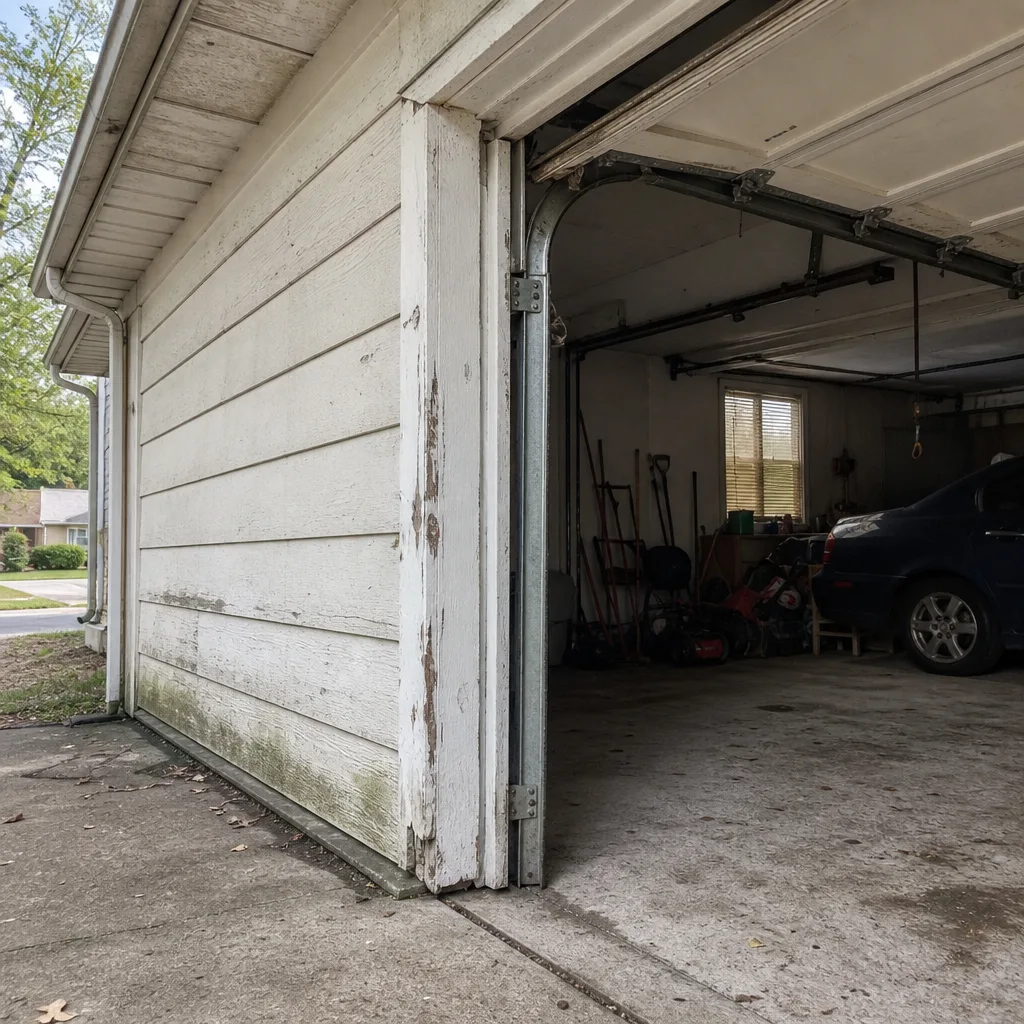 Before
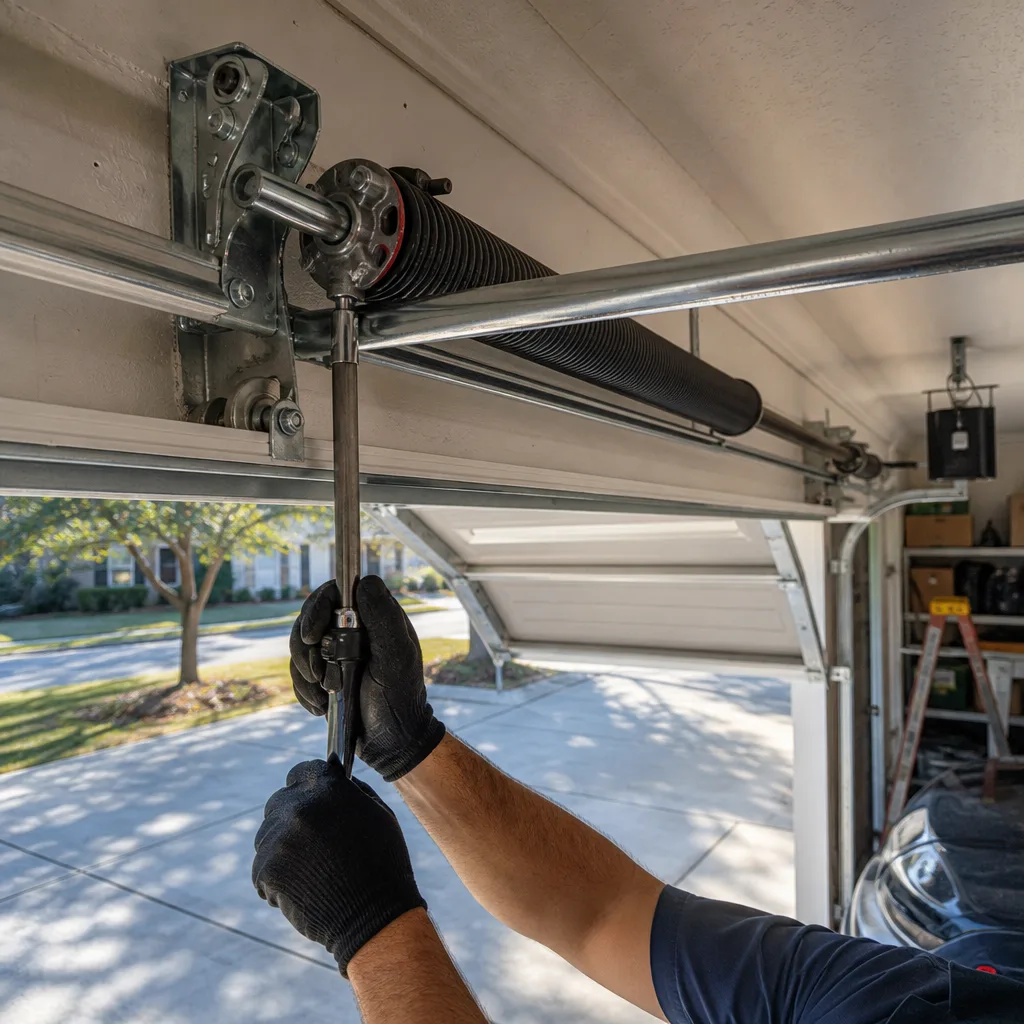 After
After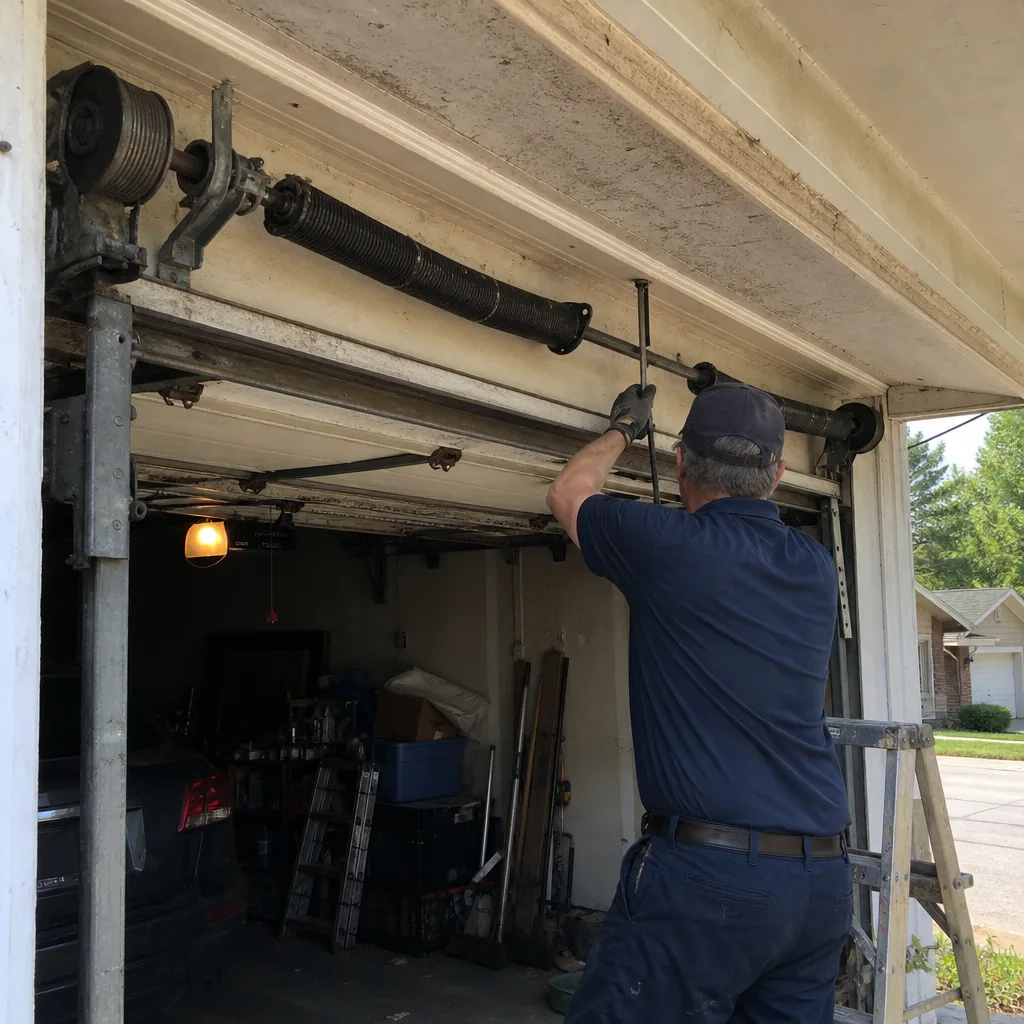 Before
 After
After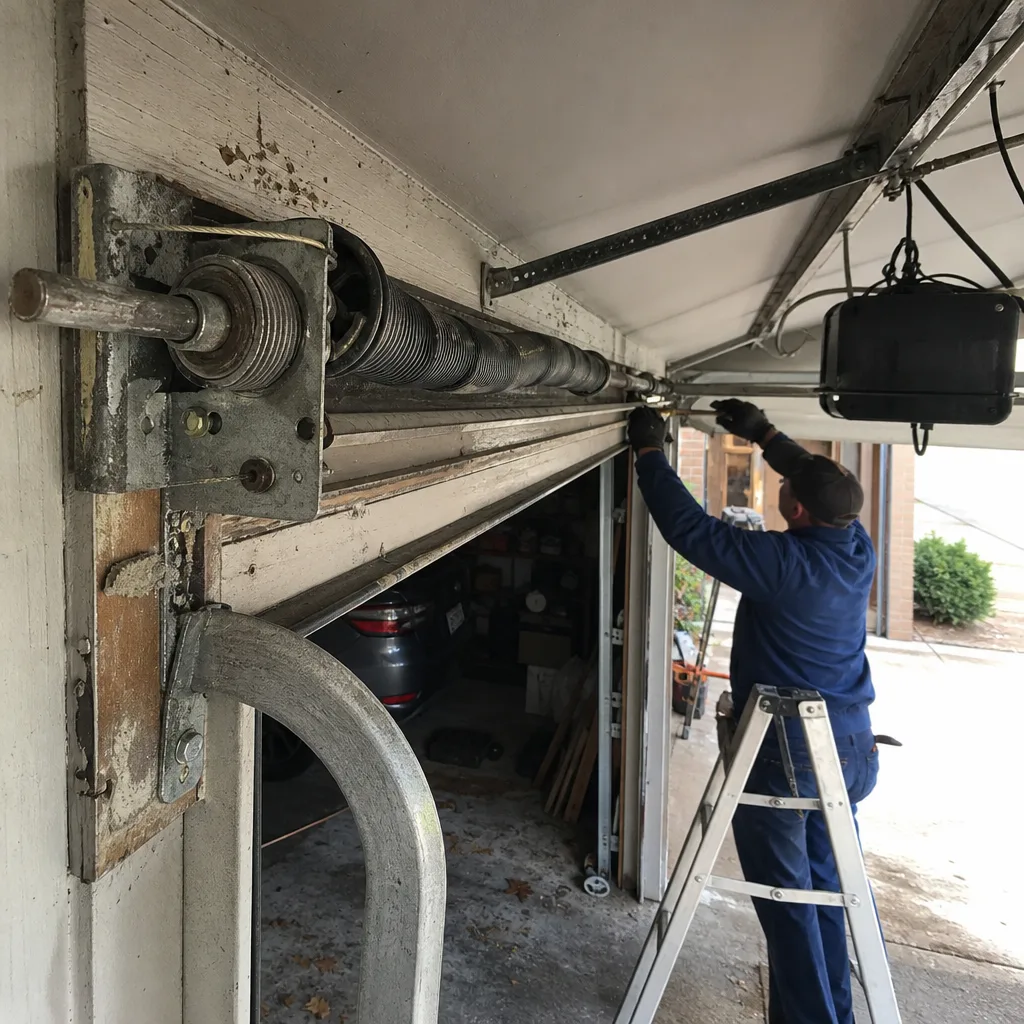 Before
 After
After