
Last updated October 16, 2026
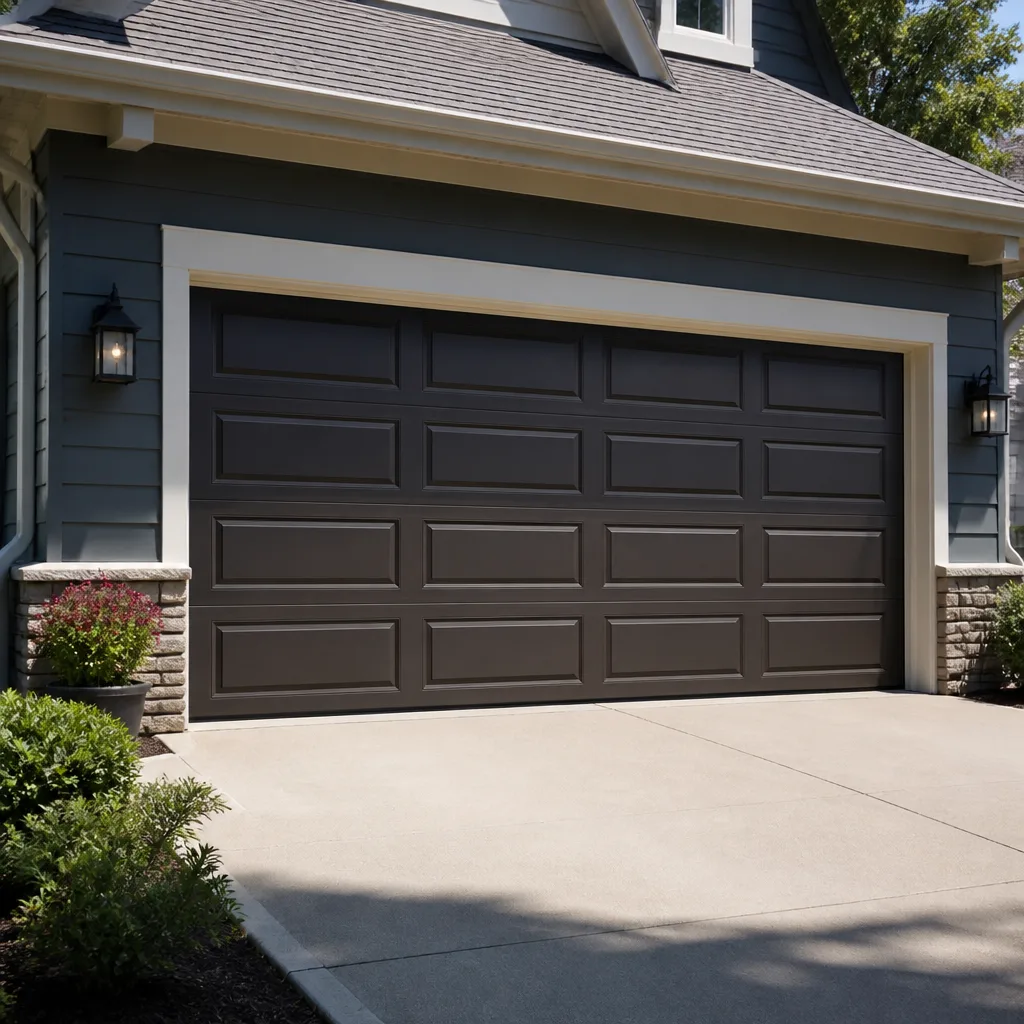 Raised-panel steel
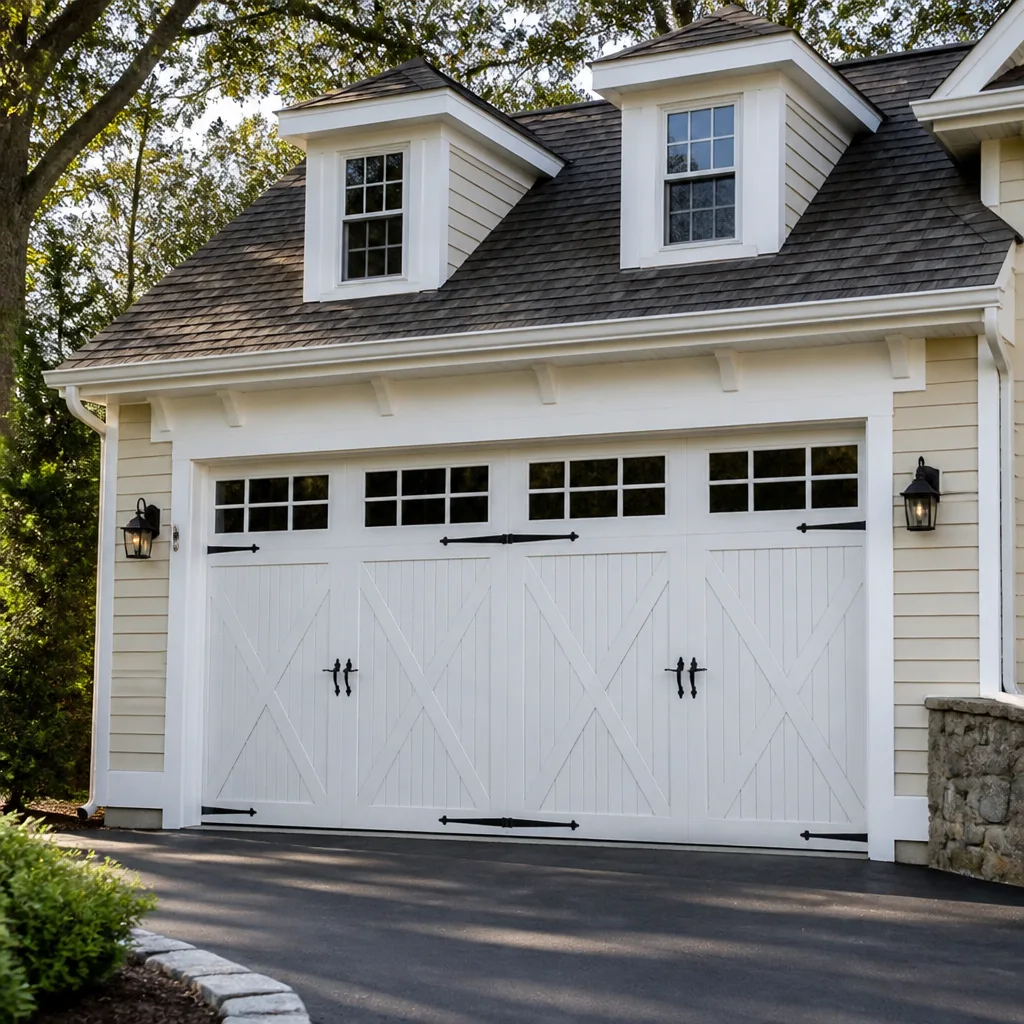 Carriage house
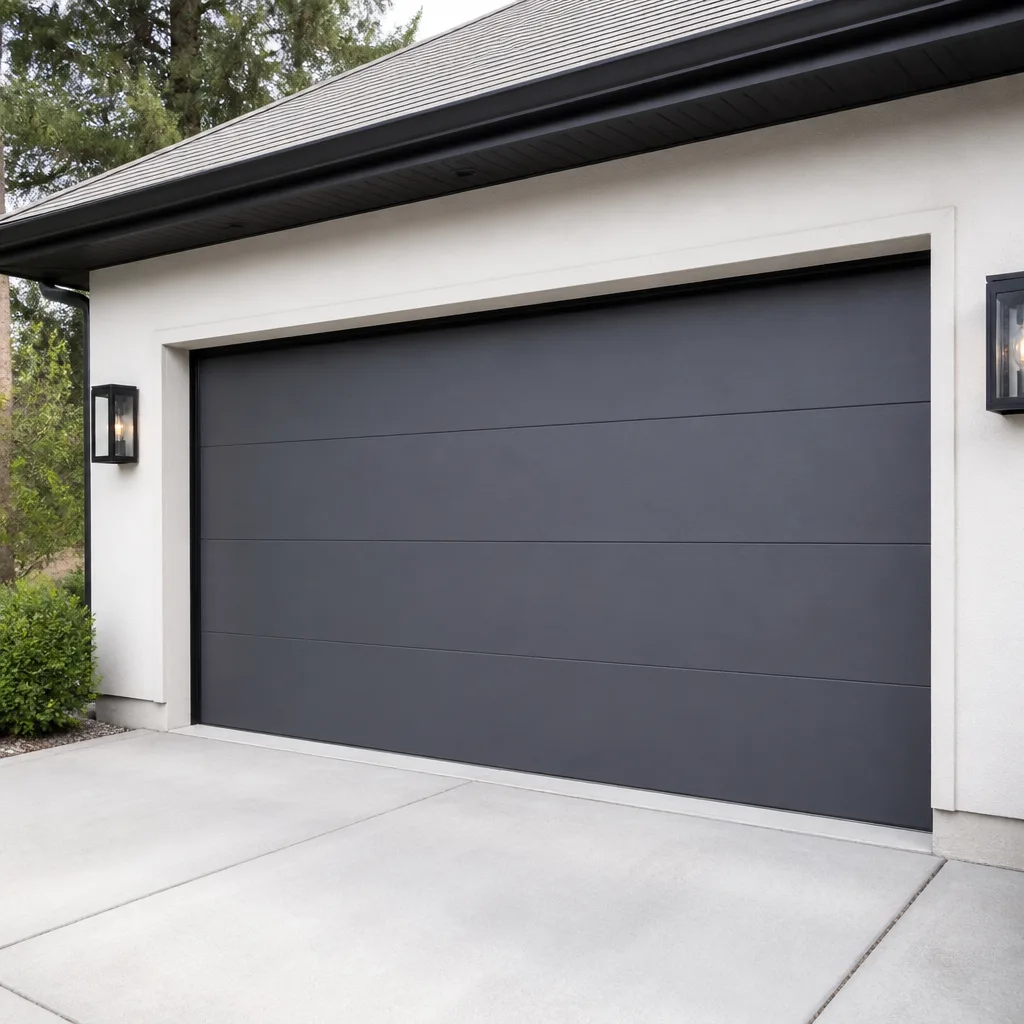 Modern flush
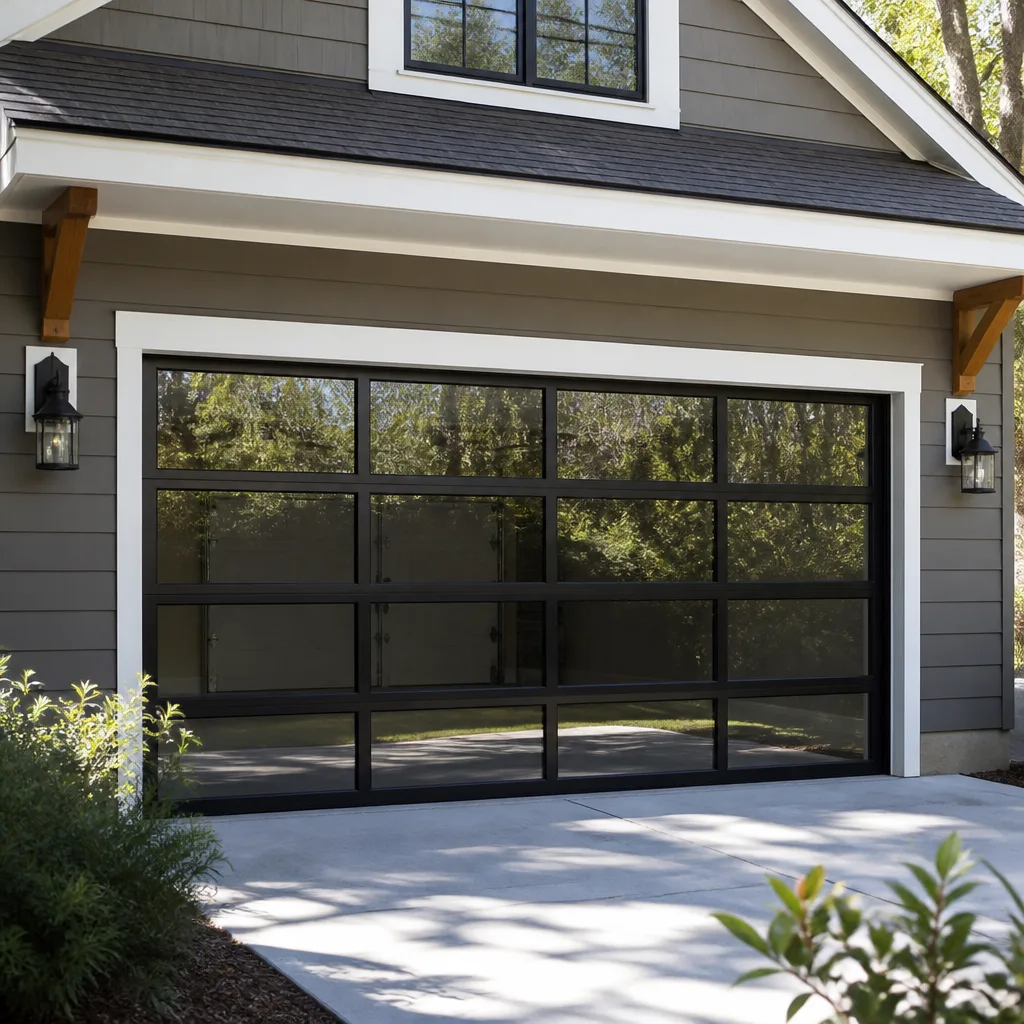 Full-view glass
 LiftMaster openers
 Chamberlain openers
Full 25-point door and opener safety check with every visit - springs, cables, rollers, tracks, and your LiftMaster or Chamberlain opener included
You get a price before we start. It does not change when the truck arrives.
Get your free estimateDIY vs Professional Garage Door: The Atlanta Homeowner’s Decision Guide
Every year, homeowners in Atlanta head to the emergency room after trying to adjust a garage door torsion spring. The spring itself costs $40 to $80. The hospital visit costs thousands, and the hand sometimes never fully recovers. This guide is not a scare piece. It’s a risk-stratification tool, built from two decades of watching what happens when a homeowner reaches for a wrench at 6 a.m. with a car trapped in the garage. By the end, you’ll know exactly which jobs you can handle this weekend, which ones need a torque wrench and a deep breath, and which ones should only be touched by someone who carries liability insurance and a background check. For more guides & resources, explore our blog.
Styles & brands we work with
Quick Answer
Most garage door maintenance in Atlanta is safe to do yourself: lubricating rollers and hinges, cleaning photo-eye sensors, reprogramming remotes, and replacing the bottom weather seal. One task above all others, torsion spring adjustment or replacement, is not a hobby job, and the injury statistics back that up. The smart rule: if the task involves unwinding stored mechanical tension, you call a professional. Everything else is a judgment call based on your tool collection, your patience, and your tolerance for a door that doesn’t close right at 11 p.m.
Table of Contents
- The Risk Framework: Three Tiers of Garage Door Work
- Torsion Springs: The Physics of Why This One Is Different
- Tier One: Safe DIY Tasks for Any Homeowner
- Tier Two: Caution DIY Tasks and the Real Tool List
- Tier Three: Professional-Only Work and What It Costs in Atlanta
- Atlanta Permits and Codes for Garage Door Opener Installation
- The Real Cost-Benefit: Atlanta Part Prices vs. What a Pro Charges
- The One DIY Job That’s Always Worth It: Bottom Weather Seal Replacement
- Common Mistakes to Avoid
- When to Call a Professional
- Frequently Asked Questions
- The Bottom Line
The Risk Framework: Three Tiers of Garage Door Work
Garage door repair in Atlanta gets flattened into one scary category online, which is why so many homeowners either attempt things they shouldn’t or pay for things they could have done themselves. Neither outcome is good. Breaking the work into three tiers based on what’s actually involved, stored energy, electrical current, or simple mechanical adjustment, gives you a decision tool you can use for any future issue.
Tier One: Safe DIY. These tasks require no special training, no dangerous tools, and no interaction with parts under tension or current. Lubricating hinges and rollers, cleaning the photo-eye sensors near the floor, reprogramming a remote, and replacing the flexible vinyl weather seal along the bottom of the door all fall here. The worst realistic outcome is a door that still doesn’t work, which means you call someone like us anyway.
Tier Two: Caution DIY. This is mechanical work that a careful person with the right tools can do, but it involves parts that move under load. Replacing a worn roller, adjusting the limit switch that tells the door when to stop, and gently realigning a track that’s been bumped out of square all fit here. The risk isn’t a spring snapping, it’s getting a finger caught between the door and the track, or setting the opener to pull the door down onto your car.
Tier Three: Professional Only. Torsion spring work, cable replacement, and full opener installation with fresh electrical wiring. The spring work is non-negotiable. Torsion springs store hundreds of pounds of rotational force, and the winding bars used to tension them can turn into projectiles if they slip. Cable replacement usually means the spring has already failed, and now the cable is the only thing left holding the door, often not by much. Opener installation is less about injury risk and more about code compliance and the electrical work involved, which brings in Garage Door Permits, Codes & Inspections in GA: What You Need to Know.
This three-tier structure is the same one Aaron Teague has used to train new technicians since founding Doyle Garage Doors Atlanta home in 2001. The reasons are simple: it respects the homeowner’s intelligence without pretending that experience is optional.
Torsion Springs: The Physics of Why This One Is Different
A torsion spring, the large coil mounted horizontally above the garage door, does the actual lifting. When the door is closed, that spring is wound tight, storing enough energy to throw a 200-pound door into the air. When the spring breaks, usually at the worst possible time, two things happen. First, the door becomes a dead weight, often trapping your car inside or outside. Second, the temptation to tackle the repair hits immediately, because the part itself looks simple and YouTube makes it look like a 20-minute job.
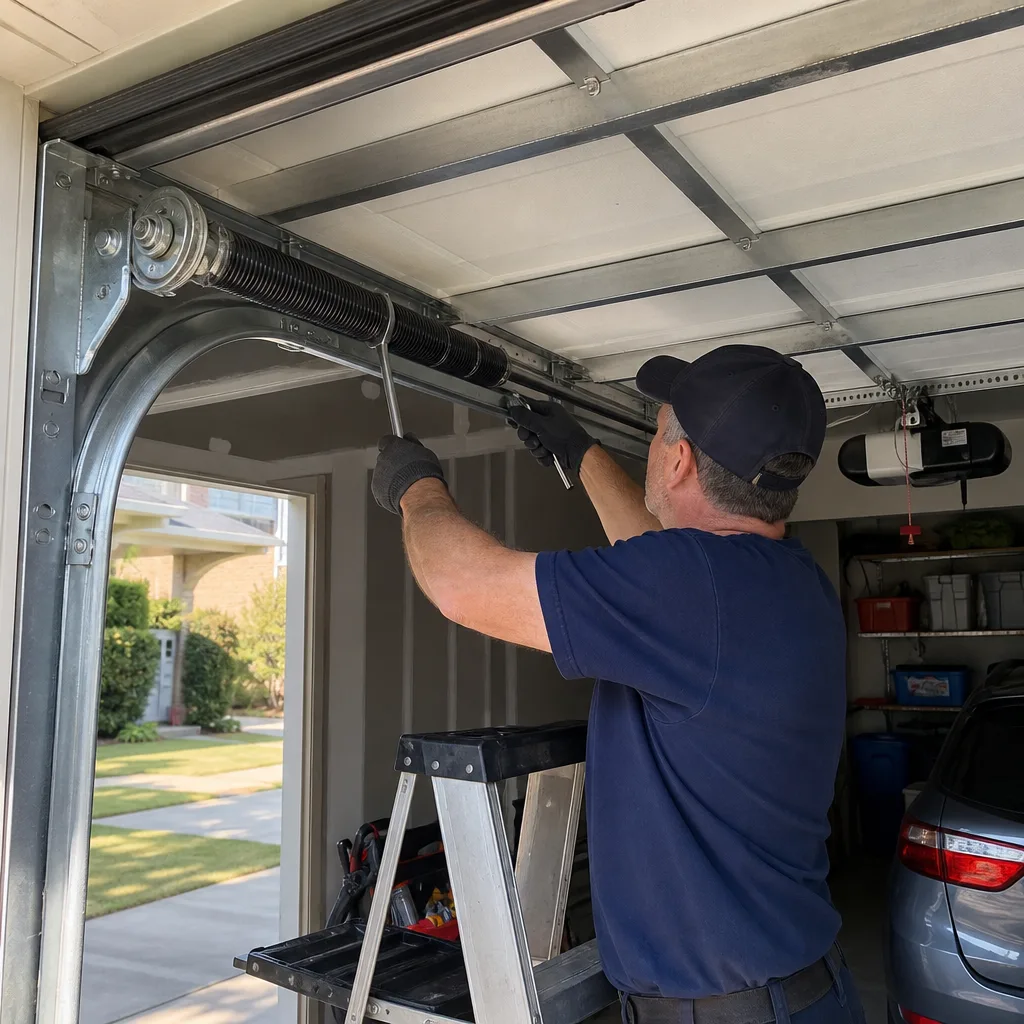
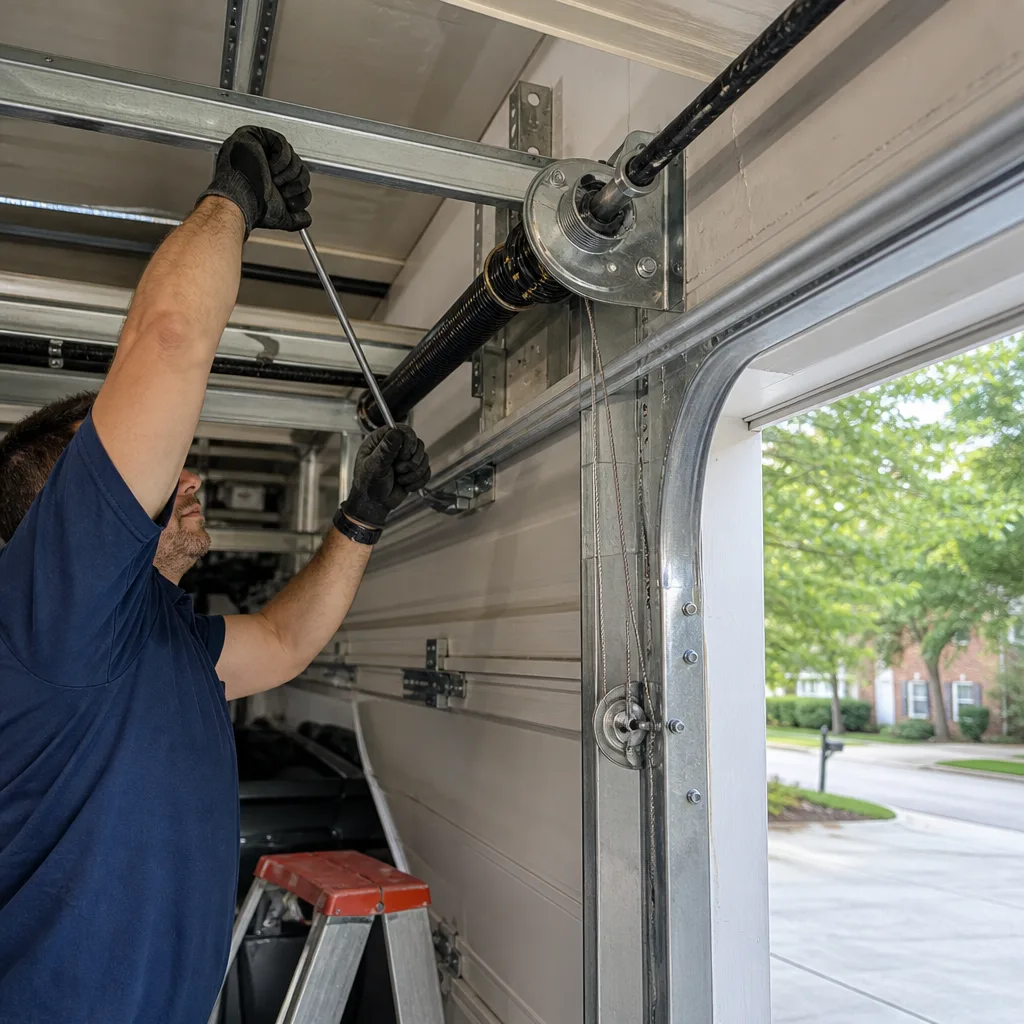
The problem is the winding process. To install a new torsion spring, you have to wind it to a specific number of turns, typically 7 to 8 for a standard 7-foot door, using two metal winding bars inserted into the spring cone. If one bar slips while the spring is under tension, it becomes a piece of steel moving fast enough to break bone. The Consumer Product Safety Commission has documented dozens of hospitalizations annually from exactly this scenario. A compound fracture to the wrist or hand is the common injury. A jaw fracture is not unheard of, because the winding bar tends to be at face height.
In Atlanta, we get a specific twist on this problem. Garage doors here cycle more often than anywhere else in the country because of the daily heat and the habit of using the garage as the main entry point. Most Atlanta homes have attached garages that open onto the kitchen, so the door goes up and down three, four, five times a day. A spring rated for 10,000 cycles lasts about seven years at that pace. When it breaks, it usually breaks mid-cycle, with the door partway up, and the tension is unpredictable at that point.
This is the one task where we don’t give a nuanced answer. Even experienced technicians treat torsion springs with respect. We use the proper winding bars, the right spring gauge for the door weight, and a healthy awareness that this specific repair fails dangerously, not just inconveniently. If you remember one sentence from this entire guide, make it this one: Garage door repair in Atlanta on torsion springs is not a weekend project.
Tier One: Safe DIY Tasks for Any Atlanta Homeowner
These four jobs require only basic tools, maybe $20 in supplies, and about an hour on a Saturday morning. Do them and your door will run quieter, last longer, and annoy you less often. None of these involve the spring, the cable, or the opener’s internal wiring.
1. Lubricating hinges, rollers, and the spring itself. Buy a can of white lithium grease or specifically formulated garage door lubricant. WD-40 is not a lubricant, it’s a solvent, and it will strip what little lubrication remains. Spray the pivot points on each hinge, the roller stems if you have metal rollers, and a light coat along the torsion spring. Do this twice a year, ideally in spring and fall, because Atlanta’s summer humidity accelerates rust on untreated metal parts, and winter temperature swings make dry rollers louder.
2. Cleaning the photo-eye sensors. Those two small units at the bottom of the track on each side are what stops the door from closing on a child or a car bumper. If your door reverses for no reason, or the opener lights blink but the door won’t close, a dirty sensor is the usual suspect. Wipe the small round lens with a soft, dry cloth. Check that the small indicator light on each sensor is glowing steadily. If one blinks, the sensors are misaligned, not dirty. Gentle adjustment until both lights glow solid usually solves it.
3. Reprogramming a remote or keypad. Every major brand, including LiftMaster and Chamberlain, uses a “learn” button on the motor unit, usually behind the light cover. Press and release it, then press the button on your remote within 30 seconds. The opener confirms with a click or light flash. This is safe because you’re working on the control system, not the lifting mechanism.
4. Testing the auto-reverse function. Place a roll of paper towels on the ground in the door’s path and close the door. It should reverse within two seconds of contact. If it doesn’t, stop using the door and call someone. This is a monthly check, not a repair, and it’s the single most important safety habit any homeowner can build.
Tier Two: Caution DIY Tasks and the Real Tool List
These three repairs sit in the gray zone. They’re mechanical but not explosive, and a methodical homeowner with the right tools can do them safely. The honest caveat: “the right tools” is doing real work in that sentence.
Roller replacement. Garage door rollers wear out. The ball bearings inside them seize, then the roller starts dragging instead of spinning, which puts scarring on the track. To replace a roller on a standard door, you’ll need a 7/16-inch socket to loosen the hinge bolts holding the roller bracket, a flathead screwdriver to bend open the bottom bracket if you’re changing the bottom roller, and a new roller of the correct diameter, usually 2 inches for residential doors. The catch: the bottom roller bracket is under cable tension. Most guides gloss over this. If the cable is still attached and the spring is intact, you do not remove the bottom bracket. You replace the other rollers and leave the bottom ones to a technician. If you ignore that, the cable can snap free and the door can drop.
Limit switch adjustment. The limit switch tells the opener where “up” and “down” are. If your door slams into the ground or stops four inches short of closed, the limit switch needs adjustment. On a LiftMaster or Chamberlain opener, you’ll find two plastic adjustment screws on the side or rear of the motor unit, usually a flathead turn. Adjust in quarter-turn increments, test, repeat. The risk here is setting the down limit too far, so the opener pushes the door into the concrete and bends the bottom panel. Go slowly. A bent panel is a several-hundred-dollar mistake in Atlanta, where most doors are steel.
Minor track realignment. If the door catches on one side or makes a grinding sound, a track may have been bumped out of square, often by a car bumper or a garbage can. You’ll need a level, a rubber mallet, and a 9/16-inch socket to loosen the track brackets from the wall. Tap the track back to vertical, confirm with the level, tighten. Do not, under any circumstances, remove the track entirely, because the track holds the cable tension path. This is a correction, not a removal.
None of these are impossible. They all require a realistic self-assessment about whether you own the socket sizes, have the patience for quarter-turn testing, and want to be doing this while the door is half-disassembled on a Sunday evening.
Tier Three: Professional-Only Work and What It Costs in Atlanta
Three categories make up the professional-only tier: torsion spring repair or replacement, cable replacement, and full opener installation. Here’s what each costs in the Atlanta metro, and what the price actually buys you.
Torsion spring replacement. In Atlanta, expect $180 to $340 for a single spring replacement including the part and labor, and $300 to $550 for a pair. The spread accounts for door weight, spring size, and whether it’s a standard 7-foot door or a heavier double-wide. The spring itself is a $40 to $80 part. The rest of the line is labor, liability, and the expertise to match the spring to the door’s exact weight, not guess. That part, the matching, is what makes a door balance perfectly at the halfway point. A mismatched spring means your opener overworks, which shortens the opener’s life by years, which costs more than the spring replacement.
Cable replacement. The cables run along the sides and transfer the spring’s tension to the door. When a cable snaps, the door hangs unevenly or stays in one spot. Cable replacement typically runs $150 to $250 in Atlanta, and we rarely see a cable fail without a connecting problem, usually a spring that’s lost tension or a bracket that’s bending. The first thing a technician does is diagnose why the cable broke, not just swap it out, because a new cable on a misaligned track will fail the same way.
Full opener installation. A new opener installation, with a LiftMaster or Genie unit, runs $350 to $650 installed in Atlanta, depending on horsepower and features like battery backup or Wi-Fi. The opener itself represents about half that cost. The rest covers mounting, adjusting travel limits, programming remotes and keypads, testing safety mechanisms, and hauling away the old one. It also covers the permit situation, which is the next section.
On every one of these repairs, the price should be written down before the work starts. Verbal estimates are a red flag regardless of which company you choose. A written price protects both sides.
Atlanta Permits and Codes for Garage Door Opener Installation
Here’s something most DIY garage door guides skip: installing a new garage door opener in Atlanta typically requires an electrical permit, because the job includes wiring the opener to a dedicated circuit or replacing an existing electrical connection. The City of Atlanta building code treats opener installation as electrical work, not just mechanical work. When a licensed contractor installs the opener, the electrical permit is pulled by the contractor’s office, and the work is done to code. When a homeowner installs the opener, the permit requirement does not disappear, and neither does the liability.
The practical difference matters. If an unpermitted opener installation causes a fire, your homeowner’s insurance carrier has grounds to deny the claim. If the opener fails because of an electrical issue and the installation was never inspected, you’re paying for the repair and the eventual inspection. A garage door opener repair in Atlanta call is simpler when the opener was installed correctly in the first place.
We see this in specific neighborhoods, like the older homes in Virginia Highland and Grant Park, where the garage was originally built for a single outlet and now needs a dedicated line for a modern opener with battery backup and Wi-Fi. The permit is not a formality in those houses. It’s the difference between an opener that works and a breaker that trips every time the door cycles.
The bottom line on permits: if you’re hiring someone to install an opener, ask whether they pull the permit. If the answer is vague, hire someone else. If you’re doing it yourself, call Atlanta’s Department of City Planning and ask what your specific project requires. It’s a 10-minute phone call that could save you an insurance fight later.
The Real Cost-Benefit: Atlanta Part Prices vs. What a Pro Charges
The DIY-versus-pro calculation always starts with the part price and stops there. That’s the mistake. Here’s the full picture for the three most common repairs in Atlanta.
| Repair | Part Cost (Atlanta) | Pro Cost (Atlanta) | What the Pro Price Buys |
|---|---|---|---|
| Bottom weather seal | $15-$30 | $85-$150 | Correct seal type, clean track prep, proper alignment |
| Single torsion spring | $40-$80 | $180-$340 | Correct spring size, winding tools, balance testing |
| Opener installation | $150-$300 | $350-$650 | Permit, wiring, programming, haul-away, testing |
| Cable replacement | $20-$40 | $150-$250 | Root cause diagnosis, safe tension release |
The part cost is not the job cost. That’s the point the repair industry has failed to explain, and it breeds resentment. A $50 spring becomes a $250 repair, and the homeowner feels gouged. What the technician knows: the $50 spring is one of 40 different spring sizes, and the wrong one balances the door wrong, which burns out the opener motor, which costs $400 to replace. The $250 spring job includes the guarantee that the door balances correctly, that the spring lasts its rated cycles, and that no one gets hurt during installation.
There’s another factor specific to our company and worth mentioning because it changes the math. Every repair from garage door installation in Atlanta through Doyle Garage Doors Atlanta carries a 365-day written guarantee. If the repair fails within a year, we come back and make it right at no charge. No DIY repair carries any guarantee at all. If you install a spring wrong and it breaks in three months, you’re buying another spring and risking another injury. Our price is the part, the labor, the liability insurance, and a year of “if it fails, we come back.” That’s the honest cost-benefit.
The One DIY Job That’s Always Worth It: Bottom Weather Seal Replacement
If you take nothing else from this guide, take this: replacing the bottom weather seal is the best DIY job on a garage door, and it’s the one Atlanta homeowners should do themselves. Here’s why and here’s how.
The bottom seal is the flexible vinyl strip that runs along the base of the door. It keeps out water, leaves, insects, and small animals. In Atlanta, it works hard. Summer thunderstorms dump water against garage doors in every neighborhood, and a cracked seal channels that water right onto whatever you store on the garage floor. A failed seal also lets hot, humid air in all summer and heated air out all winter, which matters because most Atlanta garages share a wall with a laundry room or a kitchen.
Replacing it takes 30 minutes and costs $15 to $30. Here’s the step-by-step:
- Buy the right replacement. Measure the existing seal’s channel width with a tape measure. Common sizes are 3/8-inch and 5/16-inch. Take the old piece or a photo to the hardware store.
- Open the door at the opener setting so you can access the bottom edge from inside. Do not work under a door that isn’t supported.
- Pull the old seal out of the aluminum channel. It usually slides out with a firm pull. If it’s stiff, use needlenose pliers.
- Clean the channel. Dirt and debris inside the track prevent the new seal from seating fully, which creates a gap exactly where you’re trying to prevent one.
- Slide the new seal into one end of the channel and feed it through. A shot of dish soap along the channel edge makes this easier.
- Cut the excess with a utility knife once the seal is fully seated. Leave a half-inch of overhang on each end; vinyl shrinks slightly in cold weather.
- Close the door and check from the outside for light gaps. If you see daylight, the seal isn’t seated fully.
This job is safe, cheap, and immediately noticeable. It’s also the one repair in this guide with zero interaction with springs, cables, or electrical systems. Do this one yourself, and if the door still leaks after the seal is new, the problem is the door’s level, not the seal, which is a technician call.
Common Mistakes to Avoid
- Skipping the safety check after any repair. The auto-reverse test takes 60 seconds. After any DIY or pro work, place a roll of paper towels under the door and close it. If it doesn’t reverse, the door is unsafe, full stop.
- Using WD-40 as a lubricant. WD-40 strips lubricant and leaves metal parts nearly dry. Use white lithium grease or garage-door-specific spray.
- Ignoring a broken spring’s effect on the opener. Running the opener with a broken spring forces the motor to lift the full weight of the door, which strips the plastic gears inside the opener. A $250 spring repair becomes a $550 spring-plus-opener repair when Atlanta homeowners keep hitting the button.
- Attempting the bottom bracket with the cable attached. The bottom roller bracket carries the full cable tension. Removing it without releasing tension is the most common cause of cable whipping injuries in the DIY world.
- Buying a spring from an online retailer without knowing the door weight. Springs are sized by door weight, not door width. A 16-foot door in Buckhead can weigh 50 pounds more than the same model in a smaller home, and the spring has to match.
- Trusting a verbal estimate from any garage company. In Atlanta, a legitimate company writes the price down before work starts. If the price only exists in conversation, the invoice will be bigger than the quote.
- Failing to pull the electrical permit on a DIY opener install. Unpermitted electrical work voids homeowner’s insurance coverage for that circuit and creates resale complications when you sell the house.
When to Call a Professional
If the spring is broken, call. If the cable is frayed, snapped, or off the pulley, call. If the door is off its track, call. If the opener is sparking, smoking, or tripping the breaker, call. These four conditions share a trait: the next thing that happens is an uncontrolled release of stored energy, either mechanical or electrical. The cost of a service call is less than your emergency room copay, and we say that as a company that would rather not see you in either place. Doyle Garage Doors Atlanta offers free estimates in Atlanta. Call (229) 408-2364, day, night, weekend, or holiday. A real person answers, and the technician’s name and photo are sent to you before anyone rings your doorbell.
Frequently Asked Questions
The torsion spring, without question. It stores hundreds of pounds of force when wound, and the winding bars used to adjust it can break bones if they slip. In Atlanta, where doors cycle multiple times daily, these springs break regularly, and the temptation to fix them yourself is high. Don’t. This is the one repair where the risk of serious injury outweighs any possible savings.
A single torsion spring replacement in Atlanta typically runs $180 to $340, and a pair runs $300 to $550. The price depends on door weight, spring size, and house-specific factors. The cost includes the part, the labor, and the written guarantee that the door balances correctly. Call (229) 408-2364 for an exact quote on your specific door.
Technically yes, but there’s a catch. Atlanta building codes treat opener installation as electrical work, which typically requires a permit. A licensed contractor pulls the permit for you and does the wiring to code. A DIY install without a permit can void your homeowner’s insurance on that circuit and complicate a future home sale.
Lubricating hinges and rollers, cleaning the photo-eye sensors, reprogramming remotes, and replacing the bottom weather seal are all safe DIY jobs covered in our Garage Door Repair Maintenance Checklist for Atlanta Homeowners. They require basic tools and no interaction with springs, cables, or electrical wiring. We recommend doing these yourself, especially the weather seal, which is a 30-minute job that makes a real difference against Atlanta’s summer storms.
Most residential springs are rated for 10,000 cycles, which translates to roughly 7 years in Atlanta at typical usage of 3 to 5 cycles per day. If your spring is over 7 years old and the door starts feeling heavy, get it inspected before it breaks. A broken spring usually means a door that won’t open, often with your car trapped inside.
Three things: a written price before work starts, a written guarantee on the repair, and verification of who’s coming to your house. Demand all three. If a company won’t put the price in writing, the invoice will not be the same as the quote. If there’s no written guarantee, the repair is the end of the relationship. And if you don’t know the technician’s name before they arrive, you’re opening your door to a stranger.
The Bottom Line
The DIY-versus-pro question isn’t a binary. Sensible homeowners in Atlanta should handle the easy four: lubricating, sensor cleaning, remote programming, and weather seal replacement. They should approach roller replacement, limit switch adjustments, and minor track realignment with a clear-eyed view of their own tools and patience. And they should never, under any budget pressure, touch a torsion spring, a cable under tension, or an opener’s electrical wiring. The guiding rule is simple: if it stores tension or current, it’s a pro job. If it slides, sprays, or wipes clean, it’s yours. Written by Aaron Teague, Owner at Doyle Garage Doors Atlanta, serving Atlanta since 2001.
See the difference
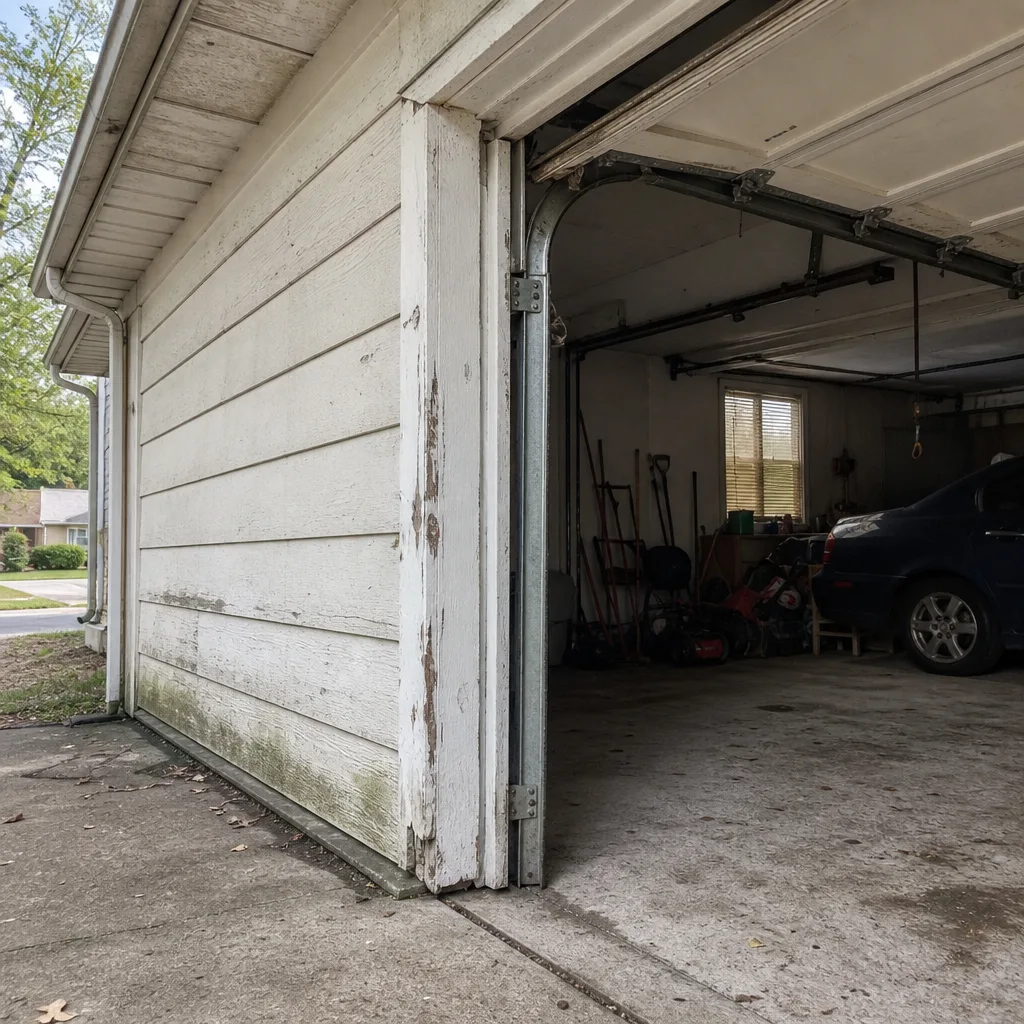 Before
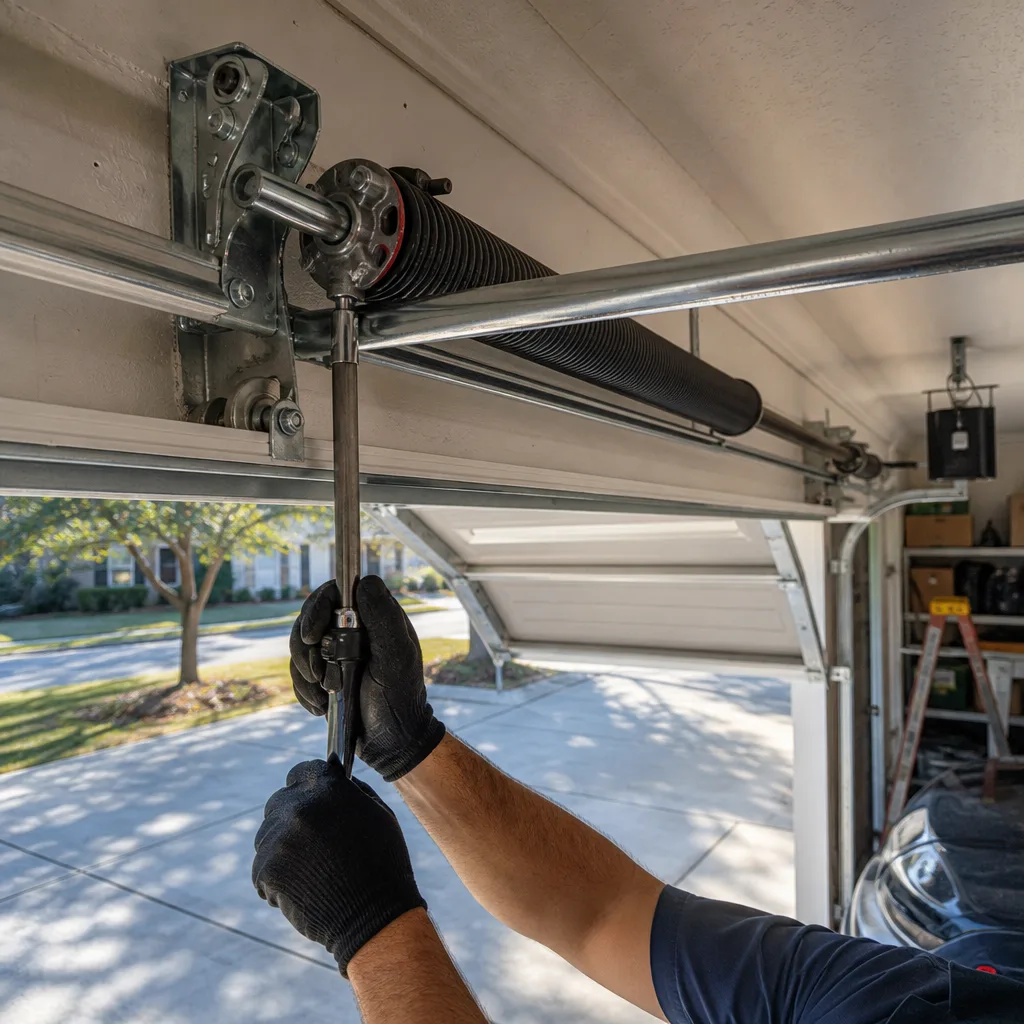 After
After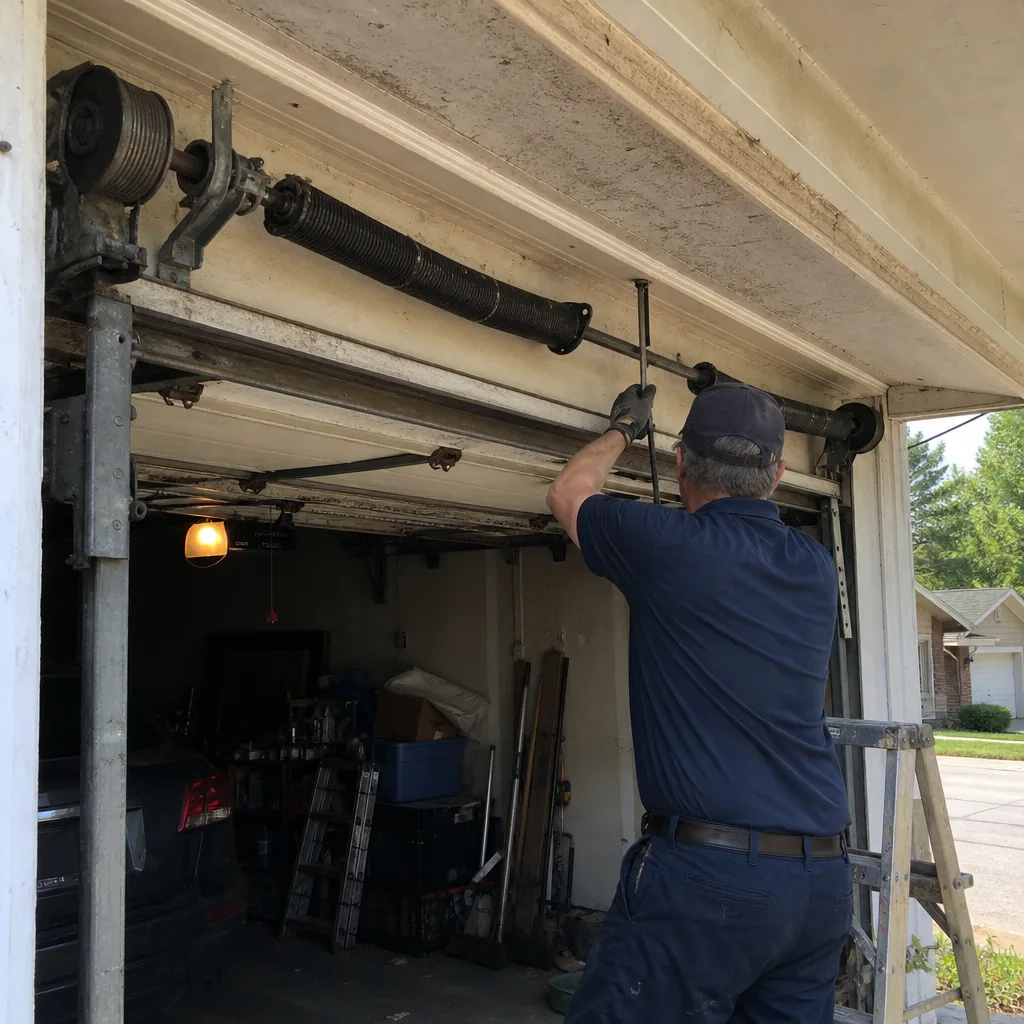 Before
 After
After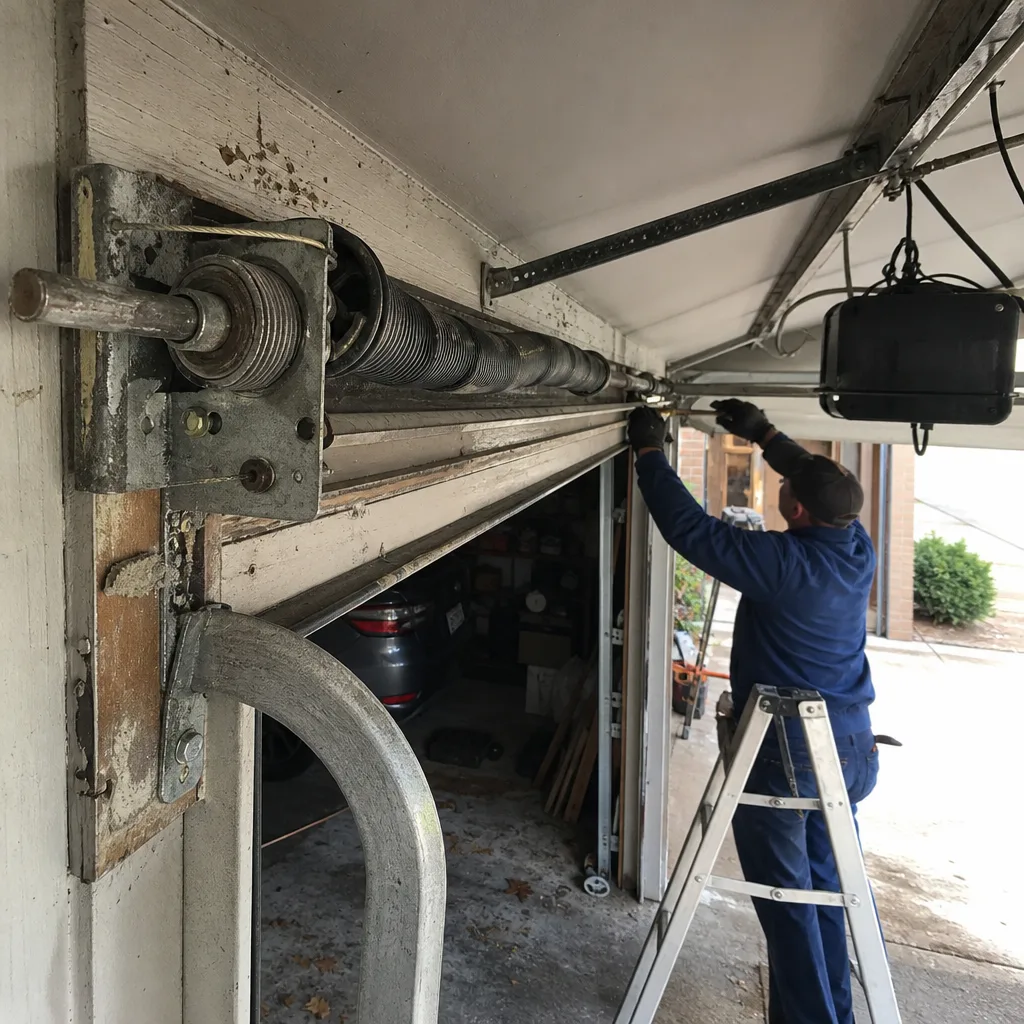 Before
 After
After